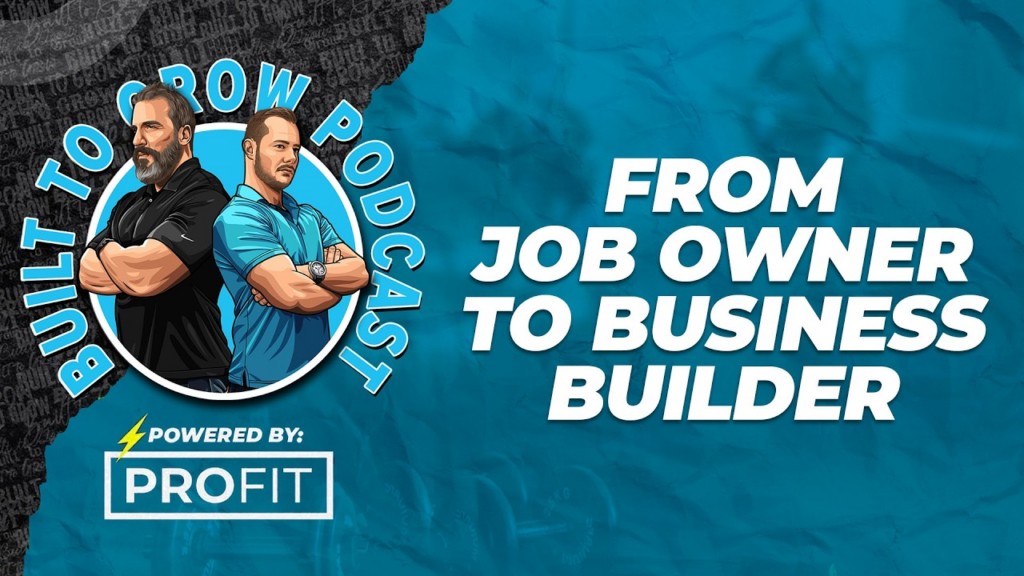
Running a gym business feels like juggling flaming kettlebells: rewarding, chaotic, and exhausting if you try to do everything yourself. The real question is simple but brutal: can your gym business operate, scale, and create wealth when you step away? If stepping out for a day or a week makes your
Running a gym business feels like juggling flaming kettlebells: rewarding, chaotic, and exhausting if you try to do everything yourself. The real question is simple but brutal: can your gym business operate, scale, and create wealth when you step away? If stepping out for a day or a week makes your stomach drop, you're probably trading your life for revenue. That's where a clear roadmap helps.
This article breaks down a straightforward three-level framework - Profit, Scale, Asset - that will help you diagnose exactly where your gym business sits today and what to focus on next. Whether you're opening your first location or wondering how to turn eight-hour days into true ownership, this guide gives practical steps, traps to avoid, and a 90-day plan you can act on.
The three levels that determine whether your gym business will survive without you
Think of your gym business as a pyramid. Each tier depends on the one below it. Skip the foundation and the whole structure collapses. The three levels are:
- Level 1: Profit - recurring revenue covers operating expenses
- Level 2: Scale - systems and people let the gym grow beyond you
- Level 3: Asset - the gym runs as an asset you can sell, invest, or hold
Randy and Zach often frame this as the transition from operator to owner to investor. At the bottom, you're still trading hours for income. Midway, you're becoming a replicable system. At the top, you own an asset that generates value independently of your day-to-day input.
Why this framework matters for a gym business
Many gym owners mistake activity for progress. Filling schedules, coaching clients, and fixing equipment feel like running a successful gym business, but they do not guarantee stability or long-term wealth. The framework provides clarity: what you should measure, what skills you need to develop, and what actions actually move the needle for your gym business at each stage.
Level 1: Profit - Build the minimal viable gym business that actually works
Level 1 is brutally practical: recurring revenue exceeds monthly operating expenses. If your gym business is losing money or you can't pay yourself reliably, this is the level to focus on. Everything here is about survival and sustainability.
Core objective
Your immediate goal at Level 1 is to create a repeatable revenue base that covers rent, payroll, utilities, and basic marketing . This is not the time for perfection. It is the time for a minimal viable product approach: ship a repeatable service, keep costs predictable, and stop leaks.
Key metrics to track
- Monthly recurring revenue (MRR) - the subscription income you can count on each month.
- Base operating expenses - rent, essential payroll, utilities, insurance, software.
- Cash runway - how many months you can operate at current burn rate without new revenue.
- Client retention - how many members renew month to month.
What to focus on right now
- Define your core offering and price it so MRR covers essentials.
- Stop experimenting with too many services. Remove nonperforming revenue streams.
- Standardize client onboarding to improve retention.
- Simplify staffing: schedule essential roles and cut unnecessary labor until revenue is stable.
- Use a basic dashboard that tracks MRR vs operating expenses daily or weekly.
As Zach puts it, treat your early gym business like a tech MVP. Figure out the minimal set of systems and processes that deliver your core result and do those at speed. If you're not profitable, everything else will create more problems than solutions.
"What is the minimal things framework that I need to do that I can do as fast as possible at speed to ensure that I'm profitable in my business." - Zach
"What is the minimal things framework that I need to do that I can do as fast as possible at speed to ensure that I'm profitable in my business." - Zach
Level 2: Scale - Turn your gym business into a repeatable system
Once profit is consistent, the next goal is to scale. Scaling means building systems and a team so the business grows beyond your personal bandwidth. Your currency changes here: you trade money for time and aim to replicate your work across people and places.
Core objective
Create processes, train staff, and implement systems that allow your gym business to operate consistently with or without you present. That doesn't mean you never teach or coach again. It means you don't have to be the bottleneck.
What changes at this stage
- From delivery to leadership - your day shifts from coaching clients to coaching coaches.
- From ad-hoc to process - marketing, sales, onboarding, programming, and retention each have documented steps.
- From firefighting to metric-driven decisions - you track leading indicators like trial-to-member conversion or coach utilization.
Skills you must develop
Moving to Level 2 requires learning skills that are different from those that got you to Level 1. You need leadership, hiring acumen, training ability, and the patience to build repeatable systems.
- Hiring frameworks that prioritize fit and teachability.
- Onboarding programs so staff reach competent delivery quickly.
- Performance management to give feedback, correct course, and retain top performers.
- Sales and marketing systems that produce predictable lead flow and conversions.
Common challenges when scaling a gym business
It's easier to do the work yourself than to train someone to do it. Owners often exhaust themselves training a coach in programming, only to realize that coach cannot sell, communicate, or manage time well. That forces owners to choose between micromanaging or letting standards slip.
- Develop the ability to train staff on nontechnical skills like sales and client relationships. Those soft skills are teachable and essential.
- Document everything. A replicable process beats hope. If a coach has a clear playbook for sales, programming, and retention, they can be coached up faster.
Level 3: Asset - Turn your gym business into something you can own or sell
At Level 3 the business becomes an asset. You become more of an investor and strategist. The goal is freedom and optionality: you can step away, sell, or scale further with confidence.
Core objective
Make the gym business attractive to buyers or valuable as a long-term cash flow asset. That means reducing owner dependency, installing strong leadership beneath you, and optimizing for predictable margins and growth potential.
What defines an asset-level gym business
- Turnkey operations with managers or directors running day-to-day.
- Clean financials showing recurring revenue, stable margins, and controlled expenses.
- Documented systems for every critical function: sales, programming, hiring, retention, finance.
- Insulation so your absence does not materially reduce revenue.
Why you want this
The currency at this stage is freedom. That can mean time freedom, financial freedom, or the freedom to pivot into new projects. A gym business that functions as an asset can be sold for a multiple because the buyer is buying systems and cash flow - not an owner's time.
"Your business becomes an asset. You're more of an investor. You don't have to be involved unless you want to be." - Randy
"Your business becomes an asset. You're more of an investor. You don't have to be involved unless you want to be." - Randy
How to identify which phase your gym business is in
Honest diagnosis is the first step. Use these indicators to determine your phase.
Signs you are in Level 1 (Profit)
- You are the primary deliverer of services and revenue dips when you miss work.
- MRR is inconsistent or barely covers expenses.
- Hiring is reactive; you staff only to plug gaps caused by your workload.
- Systems are mostly in your head.
Signs you are in Level 2 (Scale)
- Recurring revenue is steady and growing, but your time is still required for key decisions.
- There are documented processes for major functions, but execution varies by staff member.
- You're investing in leadership development and hiring to replicate delivery.
Signs you are in Level 3 (Asset)
- Day-to-day runs smoothly under managers; your absence has little to no impact on revenue.
- Financials are clean and predictable; you could hand the books to a buyer without hiding risk.
- Decisions are strategic, focused on growth or exit optimization rather than survival.
What to focus on in each phase: an actionable checklist
Once you know your phase, use a targeted checklist and stop trying to chase every shiny tactic that worked for other gyms. Focused work beats scattered effort.
Level 1 checklist: Get profitable quickly
- Stabilize pricing and packages so membership revenue is predictable.
- Simplify offerings to a core program that produces results and high retention.
- Cut unnecessary expenses and renegotiate rent or contracts where possible.
- Improve trial-to-member conversion with a short sales playbook.
- Create a 30/60/90 cash plan so you know exactly when you'll reach breakeven.
Level 2 checklist: Build systems and leadership
- Document operations for sales, onboarding, programming, and retention.
- Hire for potential - prioritize teachability and culture fit over existing skills.
- Develop a training ladder for coaches so they progress from competent to exceptional.
- Install KPIs for staff and managers and review them weekly.
- Automate admin tasks like scheduling, billing reminders, and basic client communications.
Level 3 checklist: Optimize as an asset
- Smooth leadership transitions so multiple people can run the operation if needed.
- Standardize financial reporting and build clean margins that are attractive to investors.
- Consider scale strategies such as opening new locations, licensing, or strategic partnerships.
- Protect and plan with tax and estate strategies aligned to your exit goals.
Common traps that keep a gym business owner stuck
Owners often get stuck in cycles that feel productive but prevent progress. Here are the most common traps and how to avoid them.
Trap 1: Chasing tactics without a phase plan
Buying the latest marketing or scheduling software feels like doing something, but if your gym business is in Level 1 and you're trying Level 3 tactics, the effort won't stick. Match tactics to your phase.
Trap 2: Doing it yourself instead of developing systems
It is always easier and faster to just do the work yourself. The problem is speed to short-term results creates long-term dependency. If you hire and develop staff correctly, your time becomes your most valuable currency.
Trap 3: Expecting people to be good at everything
Great coaches are not automatically great salespeople or managers. Identify skill gaps before shifting responsibilities. Provide role-specific training and realistic ramp-up periods.
Trap 4: Failing to document and measure
Without documentation, performance is inconsistent. Without measurements, you can't improve. Build simple systems and dashboards - then iterate.
How to develop the owner skills to lead a gym business through the phases
Every phase requires different owner capabilities. To move up, consciously build these skills.
From coach to leader
Leadership is a muscle. It requires practice, feedback, and a structured approach to developing others. Start with small leadership rituals: weekly staff meetings, one-on-one coaching sessions, and a consistent feedback loop.
Training the trainer
Teaching coaches requires a meta-skill: you must learn how to teach. Build a training curriculum that includes technical programming and the soft skills your gym values - sales, communication, accountability.
Delegation and accountability
Delegation without accountability is abdication. When you assign someone responsibility, give them a playbook, measurable outcomes, and review cadence. Make accountability a habit.
"Not only do you as a business owner have to develop the coach, but you yourself have to develop the skill to develop the coach." - Zach
"Not only do you as a business owner have to develop the coach, but you yourself have to develop the skill to develop the coach." - Zach
Financial and strategic moves when aiming to turn a gym business into an asset
Asset-level thinking changes your financial decisions. Instead of maximizing weekly cash, you optimize for predictable margins, clean books, and growth multipliers that buyers value.
What buyers pay for
- Recurring revenue with high retention
- Low owner dependency with documented management systems
- Scalable processes that can be replicated in additional locations
- Clean financials and predictable cash flow
How to increase the sale multiple of your gym business
- Convert casual revenue into subscriptions.
- Build a management layer so buyers are buying cash flow, not the owner's time.
- Document growth playbooks to show upside potential.
- Optimize margins through vendor renegotiation and efficient scheduling.
When your gym business is an asset, you have choices: sell for cash, keep for income, or leverage it to launch new ventures. That optionality is the real payoff for doing the hard work earlier.
A practical 90-day plan for each phase
Use these focused 90-day plans to create momentum. Pick the one that matches your phase and execute daily.
90-day plan for Level 1: Stabilize cash flow
- Week 1: Audit your finances - calculate exact MRR and base operating expenses. Identify the gap.
- Week 2: Simplify offerings - identify your single most profitable program and emphasize it.
- Week 3: Create a one-page sales script for trials and train yourself and a second staff member on it.
- Week 4-6: Cut one nonessential expense and implement a weekly cash check-in.
- Week 7-12: Improve retention by launching a consistent client-touch plan (monthly check-ins, program milestones).
90-day plan for Level 2: Build systems and leadership
- Week 1: Map the customer journey: trial to member to retained member.
- Week 2: Document the sales process and onboarding steps.
- Week 3-4: Hire one junior coach with high teachability; start a structured training ladder.
- Week 5-8: Create KPI dashboards and run weekly performance reviews.
- Week 9-12: Delegate one major area (scheduling, member communication, or sales) and hold weekly check-ins to coach the new leader.
90-day plan for Level 3: Optimize as an asset
- Week 1: Clean up financial reporting; build a monthly P&L that's investor-friendly.
- Week 2-4: Create a management handbook and emergency playbook.
- Week 5-8: Run scenario planning: what happens if the owner is gone for 30 days? 90 days?
- Week 9-12: Meet with a financial advisor or broker to understand multiples and optimize tax strategies.
Final checklist and next steps
Before you walk away from this checklist and back into your daily grind, answer these questions honestly. Your answers tell you exactly what to prioritize next.
- Is my monthly recurring revenue consistently greater than my base operating expenses?
- Can my gym business operate for 30 days at current performance without me? 90 days?
- Do I have documented systems for sales, onboarding, programming, and retention?
- Am I actively training a management layer, or am I the only person who can solve critical problems?
- Do I know how I want to use the business as an asset - sell, keep, scale - or do I just want more time?
If you answered no to any of these, pick one area from the checklist above and run the appropriate 90-day plan. Small, consistent improvements compound into real freedom for you and massively more impact for your members.
Join the Room Where Gym CEOs Are Made
Iron Circle is an exclusive mastermind for gym owners doing $30k+ per month. Quarterly in-person retreats, peer accountability, and direct access to Tim. Limited to 50 members.
Learn About Iron CircleParting thought
Your gym business can be a vehicle for impact and freedom, but not by accident. It takes disciplined focus on the right things at the right time. Treat each phase of growth as its own project. Solidify profitability, then build leadership and systems, then optimize for asset value and freedom. That sequence is not theoretical. It is practical, repeatable, and proven.
"Define where you're at, where you need to go and what it's going to take to get there." - Randy
"Define where you're at, where you need to go and what it's going to take to get there." - Randy
Start where you are. Pick one metric that matters for your current phase and move on it every day. Over time, your gym business will stop running you and start building the life and legacy you intended.
Related Posts
- Why Most Gym Owners Fail (And The Data That Proves It) - gym business coach, fitness business,
- The Workshop That Will Change Your Gym Business: The Million Dollar Model Revealed
- The gym-business Pivot That Boosted Profit 38%: Why Going All-In on Semi-Private Works
Further Reading: The Ultimate Guide to Scaling a Gym Business
About the Author
Tim Lyons
Tim Lyons is a 17-year gym owner, CEO of Gym Business Coach, and founder of Iron Circle - the private mastermind for serious gym owners. He is the author of the Built series and has helped thousands of gym owners across North America build profitable, scalable fitness businesses.
Springboard Program Iron Circle Mastermind
Continue learning
Freedom and Exit
Explore more Gym Business Coach strategies on this operating topic.
Explore this topic →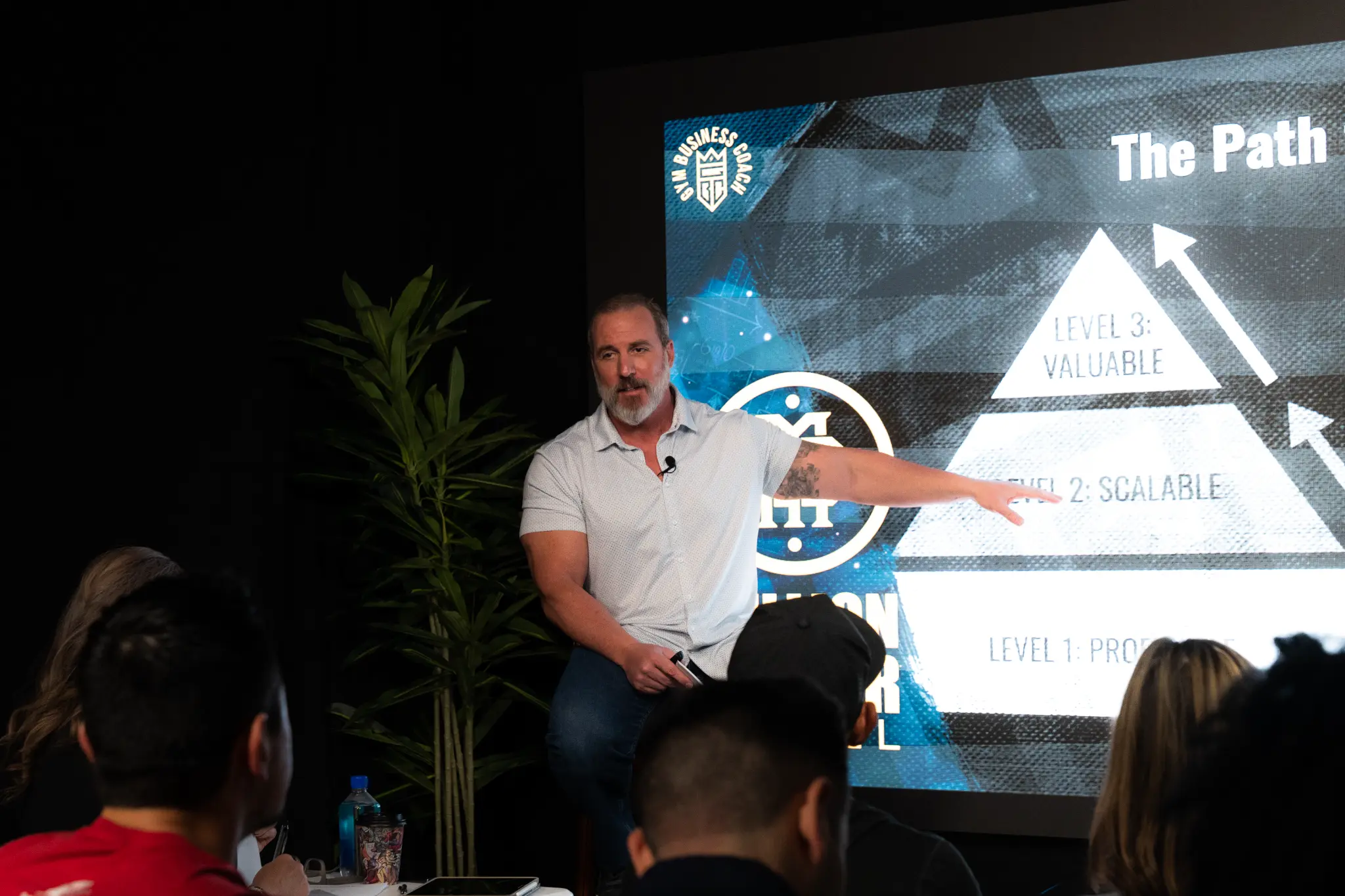
GYM BUSINESS COACH TEAM
The Gym Business Coach Team helps gym owners build more profitable, scalable businesses through coaching, masterminds, and live events. 2,500+ gym owners coached across North America. Learn more at ironcircle.net.