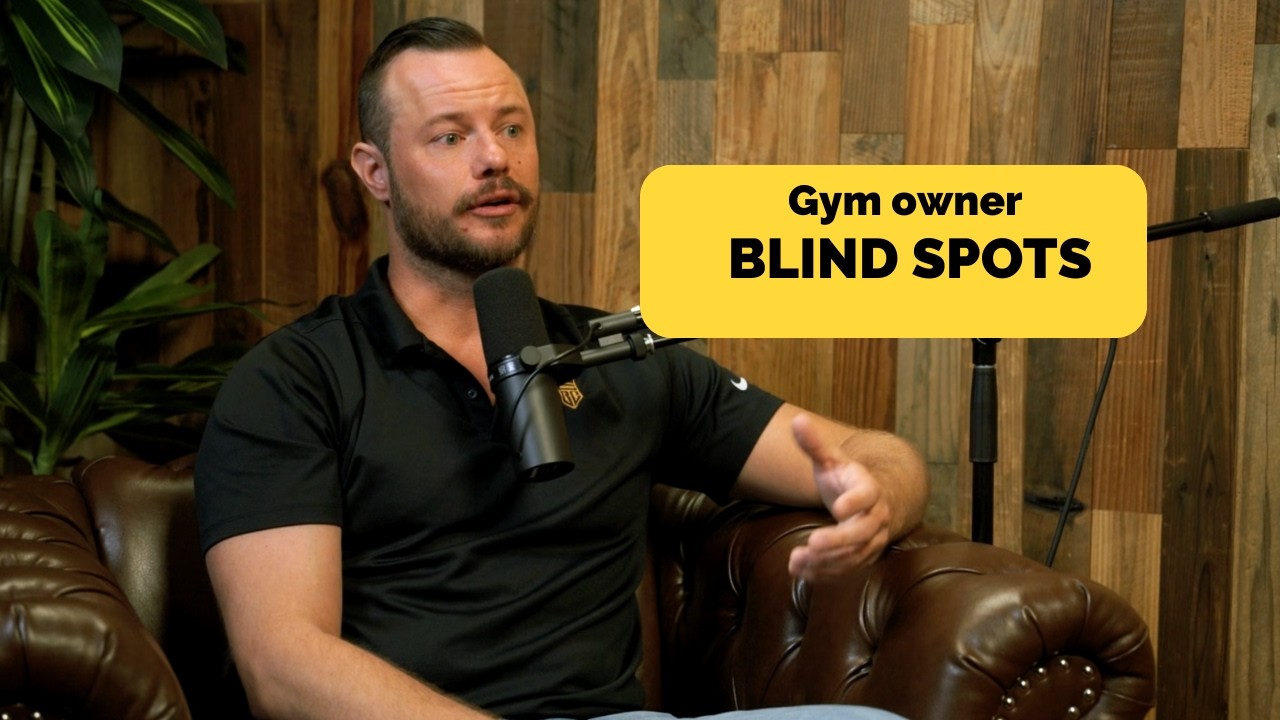
If you run a gym business, a fitness business, or you're a gym owner trying to grow without losing your mind, there's a good chance you're too close to the problem to see it clearly. This guide covers the blind spots that quietly drain revenue and how to fix them.
If you run a gym business, a fitness business, or you're a gym owner trying to grow without losing your mind, there's a good chance you're too close to the problem to see it clearly.
That's not an insult. That's just reality.
When you're in your business every day, solving problems, coaching sessions, answering staff questions, following up with leads, dealing with billing issues, and trying to keep the place from catching fire, you stop noticing things. Big things. Expensive things. The kind of things that quietly drain revenue, create friction, and cap growth.
And the wild part is this: if you walked into a competitor's gym pretending to be a prospect, you'd probably spot their issues in about five minutes.
You'd notice the weak consultation. The dusty corner. The coach who isn't coaching. The sloppy onboarding. The weird schedule. The missed sales opportunity. The awkward follow-up process. You'd mentally keep score the whole time.
But in your own gym business? Those same kinds of problems can hide in plain sight.
That's what this article is about. Not just cleaning up the cobwebs, although yeah, maybe clean those too. This is about identifying the blind spots that keep a fitness business stuck, overworked, and underperforming. It's about seeing your business with fresh eyes so you can make better decisions, serve more people, and unlock revenue that may already be sitting right in front of you.
The Problem With Being the Gym Owner
Being a gym owner requires a weird mix of confidence and tunnel vision.
You have to believe in what you're building. You have to push through hard seasons. You have to keep going when things feel messy. But that same determination can become a liability when it turns into, "This is just how we do things around here."
That line has buried a lot of good businesses.
Most gym owners are not lazy. That's almost never the issue. In fact, the opposite is usually true. They work hard. Really hard. They care a lot. They pour themselves into the business. And because they've been doing things the same way for so long, they stop questioning whether the current system is actually good.
It becomes normal. Normal to chase leads four hours after they come in. Normal to have dead spots in the schedule. Normal to underuse staff. Normal to run services that don't make sense anymore. Normal to deal with little recurring headaches that quietly eat time, energy, and money.
That's what blind spots are. They are not always dramatic failures. Sometimes they're just inefficient habits that have become part of the wallpaper.
Use the Secret Shopper Test on a Competing Gym
Here's one of the easiest ways to understand this. Imagine walking into another local gym as a secret shopper. They don't know who you are. You're pretending to be someone interested in training. Now ask yourself what happens automatically.
You start looking for faults. You notice everything.
- The coach in the corner who is half paying attention
- The client using poor form and nobody correcting it
- The scuffed wall by the entrance
- The cobweb near the ceiling
- The bathroom that is "fine" but definitely not clean enough
- The consultation language that feels clunky or off
- The way the front desk interaction lacks warmth
- The weak sales process
- The missed chances to build trust
If you went through the full customer journey, you'd probably notice even more.
- How fast they followed up
- How clearly they explained pricing
- How they handled objections
- What the first session felt like
- Whether you felt guided or dropped into the deep end
- How intentional the onboarding process was
- Whether there was any real nurturing after the sale
When it's somebody else's fitness business, the flaws are obvious. Now here's the uncomfortable part. As many things as you'd notice in their business, somebody with experience could likely walk into your gym business and spot just as many in yours. You just don't see them because you're inside the machine while it's running.
Tunnel Vision Is Expensive
Tunnel vision doesn't just affect how clean the gym looks or whether the coaching floor feels polished. It also affects the actual business model. And this is where it gets expensive.
A gym owner can spend years operating inside a setup that feels normal while leaving serious money on the table.
- No training offered at 6 a.m., even though that could be prime demand time
- One-on-one sessions scheduled in a high-value time slot that could hold a small group instead
- Staff members working fragmented part-time hours when a more efficient schedule could create a stronger full-time role
- Lead response times that are way too slow because there's no automation or speed-to-lead system
- Pricing, billing, and onboarding structures built on outdated assumptions instead of current opportunity
None of those things scream disaster on the surface. That's why they last so long. They don't break the business overnight. They just quietly limit it.
And a gym owner who is stuck in the daily grind often keeps doing what has always been done because the days are full and the business still kind of works. There's no obvious moment where the alarm goes off.
But if you zoom out, the pattern becomes clearer. You might be making $100 in a time slot that should produce $200. You might be paying for leads but failing to contact them quickly enough to convert. You might be keeping a staff structure that creates less loyalty, less buy-in, and less operational efficiency than a small adjustment would fix. Those are not tiny details. Those are leverage points.
Why Gym Owners Push Back When Blind Spots Get Exposed
Here's the part nobody loves talking about. When someone points out a blind spot in your gym business, the first reaction is often emotional. That makes sense.
No one enjoys having the weak spots in their business highlighted. No one likes hearing that the systems they built are not actually helping them as much as they thought. No one likes realizing they've spent a lot of energy on something that isn't producing the best result.
There's usually some version of this response: "That's just how we do things around here."
That phrase usually means one of two things.
- The system has never really been tested.
- The system has been tested, but changing it feels harder than tolerating it.
That second one is sneaky. The more effort you've put into keeping an imperfect system running, the harder it feels to change. Even if the current way is clearly not ideal. This is where sunk cost messes with smart people. You think, "We've already been doing it this way forever," as if that somehow proves it's the best path. But time spent is not proof of quality. Sometimes it's just proof that you got used to it.
You Can't Repair the Car While Driving It
There's a simple analogy that hits hard here: you don't repair a car while driving it. But that's exactly what most gym owners are doing every single day.
They're running sessions, solving staff problems, handling sales, answering texts, cleaning up billing issues, and trying to improve the business all at the same time. The business never really stops moving long enough for them to inspect it properly.
So what happens? The check engine light stays on. You hear the weird noise. The performance is off. Something clearly needs attention. But because you're still driving, you don't stop to deal with the root issue. You just keep going and adapt around the problem.
That adaptation becomes the routine. And eventually you stop calling it a problem at all. You call it "business." That mindset is dangerous for any gym owner. Especially one trying to scale.
The Jeep Leak Analogy and What It Means for Your Fitness Business
Think of a vehicle with a hidden leak. You don't know exactly where the crack is, but every so often you have to keep adding radiator fluid just to keep it running. That works for a while. Sort of. You can keep topping it off. You can build your routine around it. You can plan for the inconvenience. But none of that fixes the actual issue. It just keeps the vehicle moving a little longer.
That's what many gym owners do in their gym business. They patch holes. They put out fires. They create workarounds. They normalize inefficient systems. They build habits around recurring problems instead of solving them. And the real kicker is this: sometimes they don't even know what the actual problem is.
That's where outside perspective matters. If you're not a mechanic, you may know the Jeep is losing fluid, but you may not know why. A professional takes one look and says, "Here's the issue. Here's the fix. Here's what happens if you ignore it." Same thing in a fitness business.
- You may know lead conversion feels inconsistent, but not realize your response time is the real leak.
- You may know payroll feels tight, but not realize your staff schedule is inefficient.
- You may know revenue growth has stalled, but not realize your service mix is limiting capacity.
- You may know retention feels shakier than it should, but not realize your onboarding experience lacks structure.
The point is not that every problem is catastrophic. The point is that unresolved issues compound.
Choose Your Hard
There's no version of running a gym business that is easy all the time. That's just not how this works. But you do get to choose your hard.
You can choose the hard of staying stuck. The hard of repeating the same issues. The hard of carrying systems that create friction every day. The hard of under-earning and overworking. Or you can choose the hard of making a change.
- Reworking your schedule
- Changing how leads are handled
- Updating pricing or billing frequency
- Restructuring staff roles
- Rebuilding your sales consultation process
- Creating better systems for onboarding and retention
- Getting outside help to see what you can't
That kind of hard is uncomfortable, but it's temporary. The first kind of hard just repeats forever. A lot of gym owners accidentally choose permanent frustration because temporary discomfort feels scarier. That's understandable. But it's still expensive.
Stop Guessing. Start Fixing.
Springboard is Tim Lyons' coaching program for gym owners doing $10k-$50k/month who are ready to install proven systems, fix the leaks, and build a business that runs without them on the floor every day.
Learn About SpringboardWhy Outside Perspective Matters So Much in a Gym Business
Sometimes the biggest value of a coach, mentor, or trusted peer is not motivation. It's objectivity. Somebody from outside your four walls can walk in without your habits, your assumptions, your emotional attachments, and your blind spots. They can ask the dumb-simple questions that you stopped asking a long time ago.
- Why is this prime time slot underutilized?
- Why does this lead flow take so long?
- Why is this service priced or structured this way?
- Why is this staff role split up like this?
- Why is this onboarding process inconsistent?
- Why are you accepting this bottleneck as normal?
That kind of perspective is powerful because it helps a gym owner separate fact from emotion. And that's usually where real growth starts. Not with hype. Not with some fancy slogan. Just with clarity. Once you can see the issue clearly, you can decide whether to fix it. But if you never see it, you can't solve it.
What Is Actually Possible for a Fitness Business?
One of the biggest reasons gym owners stay stuck is that they don't know what's realistically possible. If your current reality is all you see, then your current reality starts to feel like the ceiling. That's why exposure matters.
When you realize that a single-location gym business can grow to seven figures with a simple model, a small team, and under 200 members, it changes the conversation. Suddenly growth is not just about grinding harder. It becomes about structure, systems, and leverage.
Because if you are at $10,000 a month in revenue, the path to $30,000 is not usually "work more hours." And if you're at $30,000 trying to get to $50,000, the next step is probably not "just hustle harder." At each level, there are specific changes that unlock the next one.
Growth in a fitness business is not random. It comes from better systems, cleaner decision-making, stronger offers, smarter scheduling, and tighter execution. If you don't know what that next level looks like, it's hard to reverse engineer your way there.
Success Leaves Clues, But the Industry Often Clings to Old Habits
The fitness industry has a habit of holding onto old ways of doing things long after they stop making sense. Some of that comes from tradition. Some of it comes from identity. Some of it comes from copying models that were built decades ago when the market was different. And some of it just comes from inertia.
A gym owner inherits ideas about pricing, schedules, staffing, packaging, and service delivery without always stopping to ask whether those ideas still fit the current business. That's a problem. Because if your model was built for a version of the industry that no longer exists, then your systems may be limiting your future before you even realize it.
This is why progressive change matters. Not reckless change. Not change for the sake of being trendy. Just thoughtful, objective change based on what helps the business grow, serve people better, and stay strong for the long term.
Where Blind Spots Usually Show Up First
If you're trying to audit your own gym business, these are the areas where blind spots tend to hide:
1. Scheduling
Do your training times actually reflect demand? Are your prime hours being used in the most profitable way? Are you limiting revenue with outdated time blocks or service formats?
2. Lead Follow-Up
How quickly are leads contacted? Is there automation to support immediate touchpoints if you're busy? Are prospects being nurtured, or are they cooling off while you're coaching a session?
3. Sales Consultations
Do consultations create trust and clarity, or do they feel awkward and inconsistent? Is your team saying what needs to be said in a clean, confident way?
4. Onboarding
What happens after someone signs up? Is the process intentional? Do new clients feel guided, supported, and confident in the early phase?
5. Staff Structure
Are staff schedules built for efficiency and loyalty? Are people in roles that maximize value for the business and stability for them?
6. Client Experience
Are clients seeing the version of your fitness business you think they're seeing? Or have little things started slipping because everybody got used to them?
7. Environment and Presentation
Yes, this includes the cobwebs. And the bathroom. And the scuffed walls. Details matter because clients notice what owners stop seeing.
The Four Gyms Framework Every Gym Owner Should Use
Here's a framework worth stealing immediately. There are really four gyms that you own.
- The gym you see
- The gym your staff sees
- The gym your clients see
- The gym your gym could become
That is such a simple idea, but it hits hard because most gym owners only spend time in the first one.
The Gym You See
This is your version of the business. It includes your intentions, your behind-the-scenes effort, your stress, your context, your rationale for why things are the way they are. You know how much you care. You know what you meant to do. You know what happened before that issue showed up. That perspective matters, but it's incomplete.
The Gym Your Staff Sees
Your team experiences the business differently than you do. They notice operational friction. Communication gaps. Role confusion. Inconsistencies. Missed systems. Stuff that makes their day harder. If staff members constantly have to work around broken processes, they feel it before you do. And in a gym business, that can affect morale, buy-in, and retention quickly.
The Gym Your Clients See
This one matters most in many ways because clients do not experience your intention. They experience your execution. They don't care that you were busy. They care whether they felt welcomed, guided, remembered, and supported. They notice the cleanliness, the energy, the communication, the professionalism, and the consistency. Clients are not comparing your gym to your effort. They are comparing it to their expectations.
The Gym Your Gym Could Become
This is the one that gets ignored way too often. This is the version of the fitness business that exists if you fix the leaks, tighten the systems, make the right changes, and stop settling for the current setup just because it's familiar. It's the stronger version. The cleaner version. The more profitable version. The better-run version. The version that serves more people without burying the owner.
Most gym owners spend too little time here. But if you never think seriously about what the business could become, you'll keep organizing your decisions around what it currently is.
A Five-Minute Exercise for Each Version of Your Gym
If you want something practical, do this. Take five minutes for each of the four gyms. Sit down with a notebook. No distractions. No defensiveness. No justifying. And ask yourself what each version reveals.
For the gym you see:
- What feels clunky right now?
- What keeps breaking?
- Where am I spending too much time?
- What have I accepted as normal that probably shouldn't be?
For the gym your staff sees:
- Where might my team feel friction?
- What systems create confusion or wasted effort?
- Do their schedules and roles make sense?
- What would they change if they were in charge?
For the gym your clients see:
- What is the first impression?
- How smooth is the sales and onboarding process?
- What details communicate professionalism?
- What details communicate carelessness?
For the gym your gym could become:
- What revenue opportunities am I missing?
- What systems would need to change to grow?
- What bottlenecks are holding capacity down?
- What would this business look like if it ran better, not just harder?
This kind of exercise can be annoyingly revealing. That's the point.
Objectivity Is a Skill, Not a Personality Trait
Some people think objectivity is something you either have or you don't. That's not really true. Objectivity is a skill. It takes practice to look at your gym business without immediately defending every choice you've made. It takes discipline to separate your identity from your systems. It takes maturity to admit that something can be good and still need improvement. That's real leadership. And for a gym owner, that's one of the most valuable skills you can develop. Because your business will only grow as far as your willingness to inspect it honestly.
The Goal Is Not Perfection
None of this means your gym has to be flawless. You are always going to have things to improve. Every business does. The goal is not perfection. The goal is awareness.
Once you become aware of a problem, you have options.
- You can fix it now.
- You can plan to fix it later.
- You can choose not to fix it, but at least that choice is informed.
What hurts a fitness business is not usually the existence of a problem. It's the existence of a problem that nobody acknowledges. That's the leak. That's the blind spot. That's the thing that quietly steals momentum.
If You Want a Better Gym Business, Stop Guessing
There's a version of your business that is more profitable, more intentional, more efficient, and more enjoyable to run. That version probably does not require some dramatic reinvention. It may just require seeing what you've stopped noticing.
For a gym owner, that is often the real work. Not more hustle. Better vision. Not more chaos. Better systems. Not more blind effort. Better awareness.
Take the secret shopper mindset and aim it inward. Look at the schedule. Look at the consultation process. Look at the onboarding. Look at the speed-to-lead. Look at the environment. Look at staff structure. Look at what your clients actually experience.
Then look at what your gym business could become if you stopped treating recurring problems like personality traits. Sometimes the breakthrough is not hidden in some advanced strategy. Sometimes it's sitting right there in the obvious stuff you've been stepping over for six months. Clean that up first. Then build from there.
Final Thought for Every Gym Owner
If you own a gym business, there are opportunities in front of you right now that you may not be seeing. Some are operational. Some are financial. Some are simple. Some will require uncomfortable change.
But all of them start with the same thing: the willingness to pause, look honestly, and admit that being close to the business makes you a little blind. That's not weakness. That's just part of the job.
The good news is, blind spots can be fixed. The better news is, once you fix them, your fitness business usually gets lighter, clearer, and more profitable. And that is worth five honest minutes times four.
Continue learning
Pricing and Profitability
Explore more Gym Business Coach strategies on this operating topic.
Explore this topic →
GYM BUSINESS COACH TEAM
The Gym Business Coach Team helps gym owners build more profitable, scalable businesses through coaching, masterminds, and live events. 2,500+ gym owners coached across North America. Learn more at ironcircle.net.