Apply restaurant hospitality to your gym to boost retention and member experience. Practical steps for mapping the customer journey and training staff to deliver consistent service.
Hospitality Lessons for Your Gym Business: A Fitness Business Guide for Every Gym Owner

Table of Contents
- Intro: Jennifer Burgess at Iron Circle Experience
- From NYU to Danny Meyer and Shake Shack
- How Eleven Madison Park Became #1 in the World
- Why Restaurants Are Harder Than Gyms
- How to Map Your Customer Journey
- The Check Is a Negative Moment: The Cognac Fix
- Small Details vs. Big Wow Moments
- Is The Bear Accurate? Inside a Fine Dining Kitchen
- See Your Business Through the Client’s Eyes
- Training Staff Who’ve Never Had 4-Star Service
- Apologizing vs. Accepting Blame
- The Overcooked Steak at Mastro’s
- Client Notes and Using Your Gym CRM
- Helping Clients Feel Seen and Heard
- Final Takeaways for Gym Owners
Intro: Jennifer Burgess at Iron Circle Experience
Your gym business is in the hospitality business. So is every fitness business, whether the gym owner thinks about it that way or not.
Yes, people come to get stronger, move better, and improve their health. The coaching has to be good. But the way someone feels walking through your door matters, too. So does what happens before they arrive, how your team handles an uncomfortable conversation, and whether anyone remembers what they told you last week.
That was the point of bringing Jennifer Burgess and the Unreasonable Hospitality team to the Iron Circle Experience in Austin, Texas. We wanted more than inspiring stories about an exceptional restaurant. We wanted to pull apart the experience and understand how to apply it inside a gym.
Jennifer helped build the hospitality approach at Eleven Madison Park, which eventually became the number one restaurant in the world. The useful lesson is not that your gym needs to become a fine dining restaurant. Please, keep the squat racks.
It is that an exceptional experience comes from deliberate choices, repeated consistently. That is something every gym owner can work on.
From NYU to Danny Meyer and Shake Shack
Jennifer grew up in Los Angeles and moved to New York at 18 to attend NYU. She loved the city and stayed. After starting in retail, she moved into restaurants, initially for a familiar reason: the opportunity to make good money in tips.
Eventually, earning money was not enough. She wanted to care about the work, the people she served, and the people working beside her.
That search led her to Danny Meyer’s Union Square Hospitality Group. Over roughly eight years, she worked across several concepts, including Eleven Madison Park, and helped open the original Shake Shack. She still describes that opening as the hardest job she has ever had.
She later spent about four years working with chef Jean-Georges Vongerichten before building her consulting company, Plus One Hospitality. Her work eventually brought her back together with the Unreasonable Hospitality team to help meet growing demand for workshops.
For a fitness business, that background matters because these ideas did not come from a motivational poster. They came from busy operations, demanding guests, and teams that had to execute under pressure.
A gym owner has a different product, but the human challenge is familiar: how do you get a whole team to care about the experience, not just finish the task?
How Eleven Madison Park Became #1 in the World
Eleven Madison Park was already a good restaurant when Will Guidara took over its leadership. There was not some obvious disaster that needed fixing. The ambition changed.
The team wanted to create a fine dining restaurant for the next generation. That meant figuring out what would distinguish it in a world where extraordinary food was already expected.
Jennifer explained that the restaurants at the top were typically known for a chef-driven experience. The food led the story. Service mattered, and an exceptional wine program mattered, but hospitality was not always the central point of difference.
Eleven Madison Park found an opportunity there: make people feel incredible, then build an approach the team could repeat.
It still took seven years. There were improvements and setbacks. Progress did not move in a straight line just because the team had a clear ambition.
That should be encouraging for a gym owner. Improving your gym business does not require pretending everything is broken. You can have good coaching, good clients, and a good reputation while still having enormous room to improve.
The question becomes: what would make the experience meaningfully better, and how do we deliver that without depending on one person having an unusually great day?
Why Restaurants Are Harder Than Gyms
We talk a lot about how hard the fitness business is. Fair enough. But restaurants offer a pretty serious lesson in operational difficulty.
Think about what has to come together during one dinner: preparation, timing, food quality, communication, service, and the atmosphere in the room. The guest experiences one evening. Behind it is an entire team coordinating dozens of moving parts.
Now consider doing that at a level that earns recognition as the best in the world. That is why the restaurant experience deserves our attention, even if we never plan to sell a single meal.
The point is not to turn this into a competition over who has the harder business. It is to recognize that another industry has spent a lot of time solving problems we also face.
A gym owner needs reliable systems, clear standards, and staff who understand how their actions affect the client. So does a restaurant operator.
We do not need to copy the restaurant’s product. We need to understand its discipline. The most valuable question is not, “Would that work exactly as described in my gym?” It is, “What is the principle, and where does that principle fit here?”
How to Map Your Customer Journey
The most useful exercise was also one of the simplest: map the client journey. Not the version in your head. The actual experience, step by step.
Start by getting different people at the table. Jennifer emphasized including both the people making decisions and the people closest to the daily work. Those groups do not always know the same things.
In a gym business, that means the owner should not build the entire map alone. Coaches and other team members may notice friction that leadership never sees.
Then work through the experience:
- Identify the big milestones. Include researching the business, receiving a confirmation, arriving, taking part in a session, and leaving.
- Fill in the spaces. What happens between the email and arrival? Between entering the building and meeting the coach?
- Go smaller. Consider the restroom, lighting, music, smell, and every little interaction.
- Label the emotional experience. Mark each moment as positive, neutral, or negative.
- Find the opportunities. Improve uncomfortable moments and strengthen the ones that already work.
The important part is resisting the urge to stop at broad labels. “Client arrives” is a starting point, not a complete description.
What do they encounter? Who notices them? What do they understand without asking?
You cannot thoughtfully rebuild an experience you have not taken the time to understand. For a fitness business, that makes this exercise much more useful than another vague instruction to improve customer service.
The Check Is a Negative Moment: The Cognac Fix
Paying the bill is part of eating at a restaurant. That does not make it the emotional high point of the evening.
Eleven Madison Park treated presenting the check as a negative moment in the guest journey. The team asked a better question than, “How do we get this over with?” They asked how they could add generosity at the exact moment they were asking for something.
The answer was cognac.
At the end of the meal, the team presented the check, thanked the guests for spending the evening with them, and offered a small complimentary pour. Then they left the bottle at the table so guests could help themselves to more.
That last detail changed the feeling. It was not simply a measured portion delivered and removed. It communicated trust and generosity.
There was practical thinking behind it, too. Guests were finishing a ten-course dinner lasting roughly three and a half hours. Most were not going to consume much more. The cost was built into the meal, and consumption worked out across many guests.
The result was a moment people wanted to talk about. Somehow, the arrival of the bill became part of the appeal.
The lesson for a gym owner is not to put cognac beside the payment terminal. It is to examine moments when your fitness business asks something of a client and consider how to make those moments feel more thoughtful.
Small Details vs. Big Wow Moments
The big hospitality stories get attention. Of course they do. An extraordinary gesture is more exciting to retell than a consistently clean restroom.
But a gym business cannot build its entire experience around waiting for extraordinary opportunities.
Jennifer made that distinction clearly. A team might have one or two opportunities for a big, personalized gesture during a day. Some days, none appear. Meanwhile, every guest enters the building. Many use the restroom. Everyone experiences the atmosphere.
Those are guaranteed opportunities.
For a gym owner, the everyday details include:
- The smell when someone walks in.
- The lighting and music.
- The condition of shared spaces.
- The way the team greets people.
- The clarity of communication befor...[truncated]
Continue learning
Retention and Operations
Explore more Gym Business Coach strategies on this operating topic.
Explore this topic →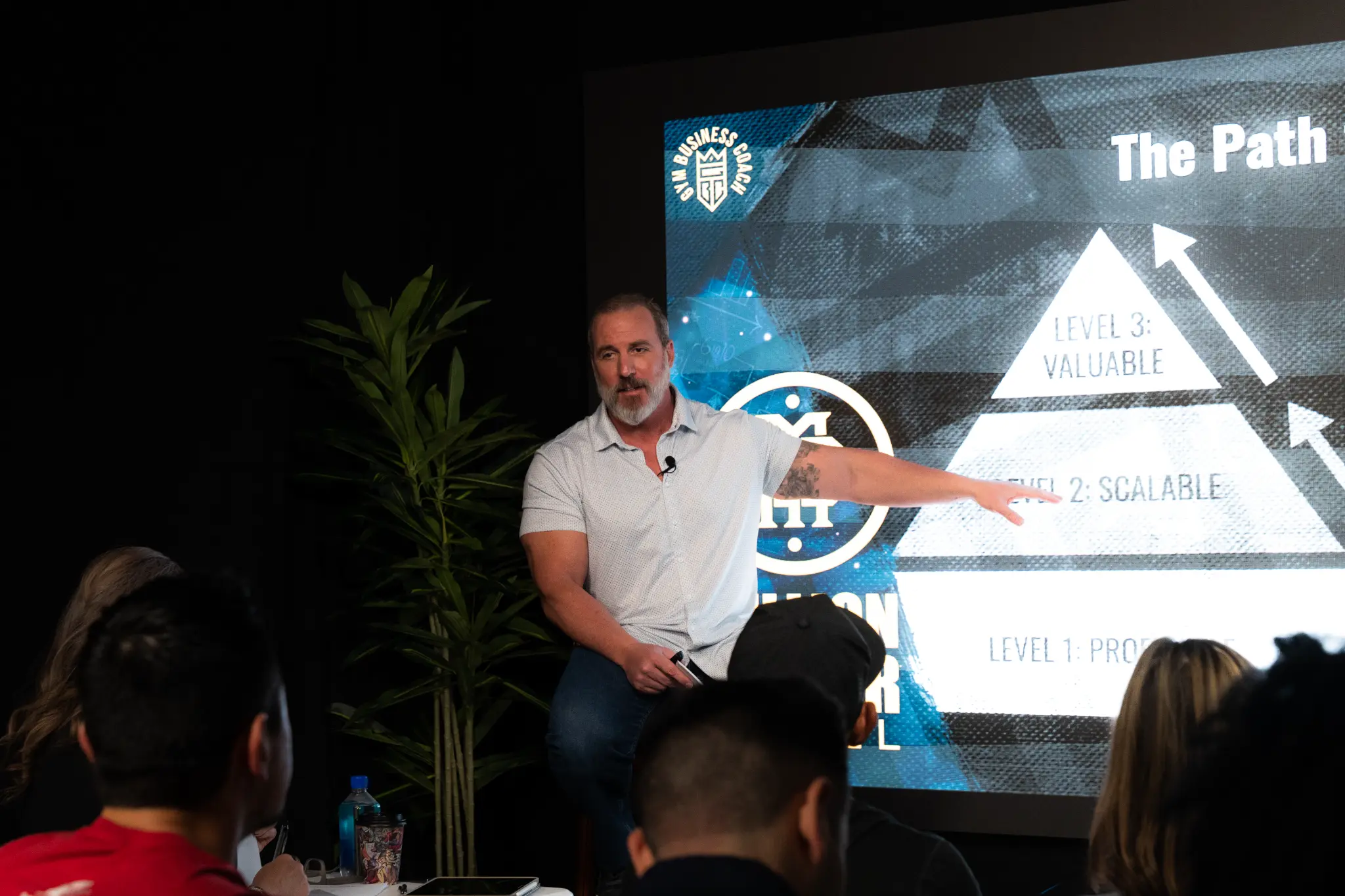
GYM BUSINESS COACH TEAM
The Gym Business Coach Team helps gym owners build more profitable, scalable businesses through coaching, masterminds, and live events. 2,500+ gym owners coached across North America. Learn more at ironcircle.net.