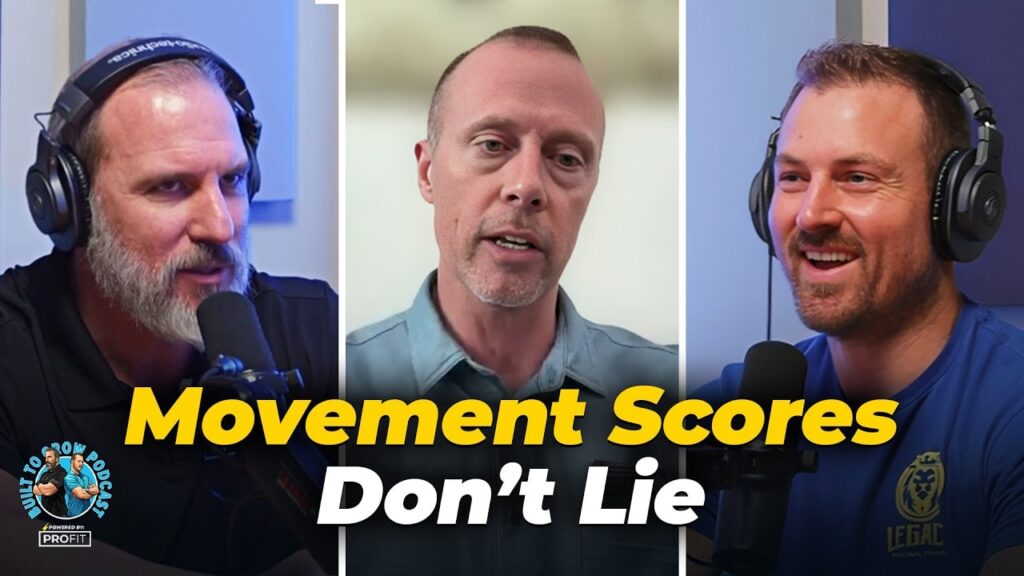
The simplest way to future-proof a gym business is to stop selling only sweat and start selling lasting movement health. Movement quality is an objective, sensitive, and actionable metric that separates hobby gyms from professional training centers. Adopt the right tools, and you can measure movemen
The simplest way to future-proof a gym business is to stop selling only sweat and start selling lasting movement health. Movement quality is an objective, sensitive, and actionable metric that separates hobby gyms from professional training centers. Adopt the right tools, and you can measure movement in under a minute, use that score to personalize workouts, and prove progress in black and white. This changes retention, pricing, lead generation, coach efficiency, and ultimately the value of your gym business.
Why movement quality matters more than ever for a gym business
Most gym business models still trade on personality and perceived intensity. That used to be enough. Today customers expect measurable outcomes, personalized programs, and proof that trainers know what they are doing. Movement quality answers that demand.
Movement quality functions like a vital sign for physical health. It captures how joints and muscles coordinate, reveals compensations, and predicts who is likely to get injured. Unlike weight or a single strength test, movement quality is highly sensitive to short term changes and it responds quickly to corrective coaching. That makes it ideal for day to day programming decisions and client accountability.
For the gym business owner, the implications are practical and profound:
- Retention improves when clients see objective progress in how they move, not just numbers on a scale.
- Price integrity increases because you can justify premium services with data, not hype.
- Coach efficiency scales because front desk staff or automated systems can capture assessments while coaches focus on coaching.
- Risk management improves because you can screen clients and systematically reduce exposure to injury-prone loading strategies.
Movement health as a business metric: the basics
Movement health is more than a clinical idea. It is an operational KPI for your gym business. Treat it like any other metric you would use to run your operation.
- Assess quickly: Capture a movement score in 30 to 60 seconds.
- Score consistently: Use the same protocol to compare across clients and across time.
- Act immediately: Let the assessment feed programming decisions for that day.
- Report objectively: Show clients what changed so they believe the process.
When movement becomes a repeatable KPI in your gym business, every layer of operations shifts. Front desk staff become part of assessment funnels. Coaching becomes more surgical. Marketing moves from promises to verifiable outcomes.
Marty Miller's framework: three nonnegotiables for trainers
In practice, elite trainers follow a simple three-rule framework that aligns with the needs of a modern gym business:
- Do no harm. Never expose a client to loading patterns they are not prepared for.
- Give them what they want, while giving them what they need. People come for fat loss, strength, or sport. Translate those goals into a plan that starts from their movement baseline.
- Have fun. Training should be engaging. Fitness is a lifestyle, not a punishment.
These rules help you defend premium pricing in a crowded market. If your gym business follows them consistently, you will attract clients who want long term value, not short term thrills.
How the right technology changes assessment from art to repeatable process
High-level movement assessment used to be handcrafted: multiple camera angles, goniometers, subjective notes. It worked, but it was slow, inconsistent, and impossible to scale .
A gym business that wants to scale needs systems that do two things: speed up the assessment process and make it objective. When a gym business replaces slow subjective assessments with instantaneous, reproducible movement scans, the benefits are immediate.
Here is what a modern movement scan delivers:
- Instant 3D mapping of joint positions via LIDAR or depth-sensing cameras.
- Consistent scoring across multiple assessors and locations.
- Rapid re-assessment so you can prove short-term neurological or mobility changes in minutes and longer-term structural change across weeks.
- Objective asymmetry detection so programming can be personalized for safety and progression.
What a gym business gains by making movement scores front and center
When you incorporate movement scores into your product, several shifts happen concurrently:
- Sales becomes education. Rather than "selling" personal training, your team uses objective reports to explain what the member needs. That transition from persuasion to education makes upsells natural and defensible.
- Retention becomes measurable. After six weeks you can show a client their movement score improved from a 47 to a 62. That is progress hard to argue with.
- Pricing power increases. You can differentiate your offering from discount operators and justify higher price points because you deliver demonstrable health improvement.
- Lead generation scales. A portable screening tool becomes a community outreach asset. Bring it to events and capture leads with a tangible deliverable.
Bottom line: movement reporting removes subjectivity from coaching and gives a gym business a defensible value proposition.
Practical example: earning the right to advanced exercises
One powerful concept for coaches is the idea of "earn the right." Not every client is ready to perform an explosive Olympic lift or a heavy bilateral back squat.
Use movement scores to create progression gates. If a client's single-leg squat score is 37, handing them explosive olympic-style work would be negligent. Instead, design a clear progression that takes them into the 60s before introducing high-risk, high-reward exercises.
This approach protects your clients and protects your gym business from liability. It also creates a motivating journey. Clients understand exactly what they must improve to access new training elements.
Progression example
- Score 30 to 39: Focus on basic stability, ankle dorsiflexion, and hip mobility.
- Score 40 to 59: Introduce unilateral loading, controlled tempo, and core stabilization.
- Score 60 plus: Unlock bilateral heavy loading, advanced kettlebell and barbell lifts, and explosive work.
Putting these gates in your programming increases client safety, improves outcomes, and helps your gym business keep clients longer because progression feels earned and visible.
Integrating movement data into group and semi-private formats
Semi-private training is personal training delivered to small groups with unified delivery systems. For a gym business, semi-private is a high-leverage revenue model because one coach can serve multiple paying clients while still delivering personalization.
The missing piece has always been precise personalization at scale. When movement data feeds directly into the semi-private control panel, every workout can auto-adjust for each client based on that day's movement score.
- Coaches spend time coaching, not writing bespoke programs on the fly.
- Clients see progressions and understand the pathway from kettlebells to barbells.
- Front desk staff can run screening funnels that update programming automatically.
It is a rare advantage for a gym business to combine the economics of semi-private training with the clinical rigor of movement-based personalization.
How to use movement screening as lead generation
Movement screening is not only an internal tool. It is an exceptional external marketing asset.
Offer free or low-cost screening events in your community. Capture emails, provide an easy-to-understand movement report, and follow up with a recommended entry plan. Because the assessment is objective and fast, it becomes a compelling reason for prospects to enter your funnel. In contrast to a free workout pass, a movement assessment provides immediate perceived value and positions your gym business as professional and data driven.
Front desk workflows that scale assessments
One major barrier for gym business operators has been the labor cost of screening. The solution is simple: move the assessment to the front desk or a tablet station and let staff capture the scan while coaches prepare for classes.
- Prospect or member arrives and is asked to complete a quick movement scan on the tablet.
- The system returns a movement score and a short report within a minute.
- The coach views the score before the session and tailors cues or load adjustments accordingly.
- The client sees the report in their account and receives a small homework plan for targeted mobility or activation work.
This workflow frees coaches from administrative tasks and ensures every client receives baseline personalization. For a gym business, this is one of the fastest ways to increase service quality without proportional increases in payroll.
Communicating movement data to clients
Translation matters. Objective data is only as powerful as the way you explain it. Keep the conversation simple and focused on what they care about.
Use this language:
- Score: "Right now you are at a 47." That is easy to understand.
- Meaning: "You have some movement compensations around your hips and ankles that make a heavy back squat unsafe for now."
- Plan: "Here are the exact steps and exercises to get you into the 60s so you can progress safely."
- Commitment: "Do these three things consistently and we will reassess in six weeks."
Clients respond to a system. When the gym business presents a measurable plan, clients buy into the process and show up more consistently.
Why movement health is the fifth vital sign for the gym business
Heart rate, blood pressure, sleep metrics, and HRV are already tracked by wellness-minded consumers. Movement health is the missing piece because it is the domain where fitness professionals have authority. It is an indicator for longevity, function, and day to day capability.
"Movement health will be the fifth vital sign."
"Movement health will be the fifth vital sign."
That claim is not hyperbole. As longevity medicine and preventive care adopt more functional metrics, gym businesses that already track movement will sit at the intersection of performance and health. That opens partnerships with medical practices, corporate wellness programs, and longevity clinics .
Common objections and how to answer them in your gym business
When new technology arrives, you will hear hesitation. Here are common objections and practical responses that protect your gym business strategy.
- Objection: It is too expensive. Response: Treat it as capital investment. Calculate added retention, premium pricing, and lead conversion. The ROI often exceeds equipment cost in 6 to 18 months.
- Objection: My coaches are already good at assessments. Response: Good is subjective. Objective scores create consistency and allow non-expert staff to contribute to the funnel. That multiplies coach impact.
- Objection: Clients do not care about scores. Response: People love measurable progress. Offer the score as a confidence builder during onboarding and as a retention metric during follow up.
- Objection: This will slow down classes. Response: With the right workflow, assessments happen before class via a tablet station. Programming auto-adjusts so class flow remains smooth.
Implementation roadmap for a gym business
Rolling out movement quality in your gym business is a project, not a gimmick. Use this phased approach:
- Assess readiness: Audit staff, technology, and programming. Decide whether to integrate movement scoring into onboarding, check-ins, or before classes.
- Pick the right hardware: Choose a reliable depth-sensing camera or LIDAR tool that provides repeatable scores.
- Integrate with your software: Ensure the movement score feeds directly into your member app or coaching control panel so workouts adjust automatically.
- Train staff on communication: Educate front desk and coaches on how to explain scores in simple terms.
- Run a pilot: Start with 30 to 50 members and iterate on workflow and messaging.
- Scale: Once the pilot improves client retention and engagement, roll it out to the whole facility and use the screening as a lead gen asset.
Measuring success: KPIs your gym business should track
After implementation, monitor these KPIs to determine impact:
- Retention rate for clients who complete assessments versus those who do not.
- Conversion rate from screening events to paid programs.
- Average revenue per user when movement-based programming is applied.
- Number of program progressions (e.g., clients moving from kettlebell to barbell work).
- Injury incidence tracked across the membership to see whether corrective programming reduces acute complaints.
Quantify everything. When you can show improved retention and ARPU tied to movement screening, your gym business wins as a matter of record.
Real-world coaching cues that change movement scores in minutes
One of the most compelling proofs of concept is the immediate neuromuscular change you can achieve with targeted coaching. In practice, six to eight minutes of activation, breathing, and controlled mobility often produces a temporary improvement on the movement scan.
Examples of quick interventions:
- Ankle mobility drills to stop knee valgus during squats.
- Diaphragmatic breathing and pelvic reset for low back arch compensation.
- Single-leg stability holds to improve unilateral symmetry before adding load.
These fast wins are motivational and empower clients to stick with the program. For a gym business, delivering those micro-improvements repeatedly builds trust and habit.
How to package movement-based services in your pricing tiers
Movement data allows you to create clear product tiers that justify higher price points:
- Tier 1 - Movement Screen Only: Low cost entry point used as lead capture.
- Tier 2 - Movement Guided Group: Semi-private training with programming that auto-adjusts based on daily scans.
- Tier 3 - Movement + Rehab Hybrid: Premium small groups or one-on-one training combined with targeted corrective sessions and home programming.
Each tier clearly communicates what the client receives and what outcomes they can expect. That clarity is what allows a gym business to escape the price war and position itself as the local authority for functional longevity.
Partnership opportunities for gym business owners
Movement screening opens doors beyond your four walls. Consider these partnerships:
- Local clinics and physical therapists: Co-treat clients who need rehabilitation follow up and create warm referrals.
- Corporate wellness: Offer on-site screenings to businesses that want to reduce employee injury and improve productivity.
- Sports clubs: Provide baseline screening for amateur sports teams to improve performance and reduce downtime.
These partnerships diversify your revenue and increase your gym business visibility in the community.
Final truth: this is a competitive moat, not a gadget
Technology for technology's sake rarely moves the needle. The difference here is that objective movement data aligns with core fitness outcomes and the real concerns of your members. It is not a gimmick. It becomes an operational standard that raises quality, protects clients, differentiates the brand, and ultimately increases revenue.
If you are running a gym business and you want to avoid the red ocean of discount operators, make movement quality central to your product. Teach clients about their score. Build progressions that require them to earn access to advanced training. Automate the assessment process so you can scale coaching. Use screenings as lead gen. And measure the KPIs that matter: retention, conversion, ARPU, and injury incidence.
Quick checklist to get started
- Decide which parts of the member journey will include movement screening.
- Select a reliable movement capture device and software.
- Integrate scores into your coaching or semi-private app so programming auto-adjusts.
- Train front desk and coaching staff on the new workflow and scripts.
- Launch a pilot with 30 to 50 members and measure results for 8 to 12 weeks.
- Iterate messaging and scale what works.
Closing thought for gym business owners
Becoming the local authority on movement health is one of the clearest paths to building a durable gym business. It aligns coaching, client experience, and marketing under a measurable promise. Clients who receive objective proof of progress stay longer and are willing to pay more. Coaches become more effective. Operations scale. That is a rare win win.
Make movement quality a core product, not a supplement.
Ready to scale your gym alongside a community of 7-figure owners? Learn more about the Iron Circle . Related Posts Should Your Gym Business Avoid Debt? How to Decide When to Bet on Yourself Why Your Gym Business Is Losing Coaches - and How to Build a Team That Actually Cares The Most Expensive Mistake in Your Gym Business and How to Fix It Further Reading: The Gym Owner's Guide to Hiring and Operations About the Author Tim Lyons Tim Lyons is a 17-year gym owner, CEO of Gym Business Coach, and founder of Iron Circle - the private mastermind for serious gym owners. He is the author of the Built series and has helped thousands of gym owners across North America build profitable, scalable fitness businesses. Springboard Program Iron Circle Mastermind
Ready to scale your gym alongside a community of 7-figure owners? Learn more about the Iron Circle .
Related Posts
- Should Your Gym Business Avoid Debt? How to Decide When to Bet on Yourself
- Why Your Gym Business Is Losing Coaches - and How to Build a Team That Actually Cares
- The Most Expensive Mistake in Your Gym Business and How to Fix It
Further Reading: The Gym Owner's Guide to Hiring and Operations
About the Author
Tim Lyons
Tim Lyons is a 17-year gym owner, CEO of Gym Business Coach, and founder of Iron Circle - the private mastermind for serious gym owners. He is the author of the Built series and has helped thousands of gym owners across North America build profitable, scalable fitness businesses.
Springboard Program Iron Circle Mastermind
Continue learning
Retention and Operations
Explore more Gym Business Coach strategies on this operating topic.
Explore this topic →
GYM BUSINESS COACH TEAM
The Gym Business Coach Team helps gym owners build more profitable, scalable businesses through coaching, masterminds, and live events. 2,500+ gym owners coached across North America. Learn more at ironcircle.net.