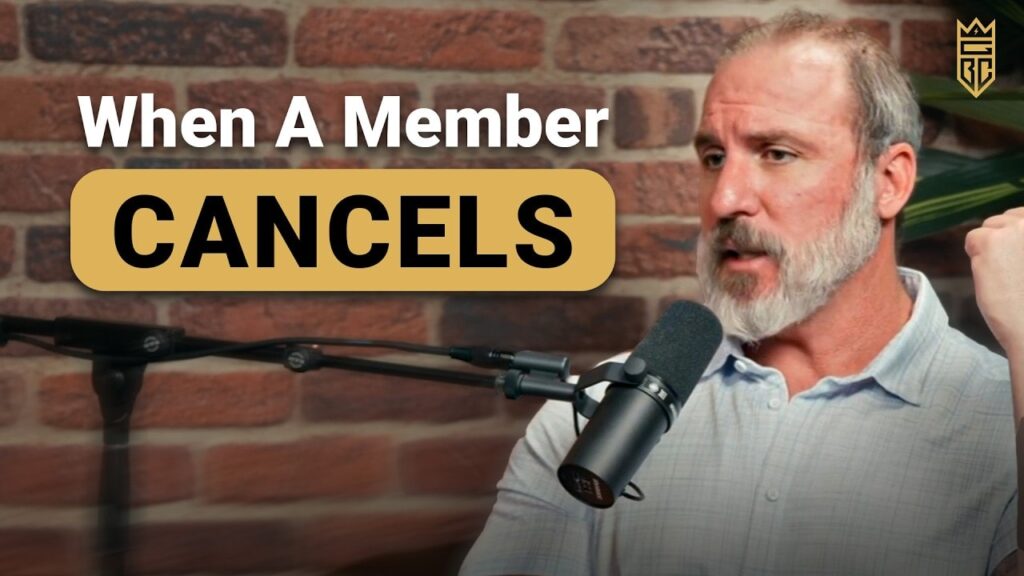
Running a successful gym business isn't just about programming, equipment, or flashy marketing. It is also about how you treat people the moment they decide to leave. The way you handle cancellations says more about your brand than any ad or testimonial ever will. Get this wrong and you won't just l
Running a successful gym business isn't just about programming , equipment, or flashy marketing. It is also about how you treat people the moment they decide to leave. The way you handle cancellations says more about your brand than any ad or testimonial ever will. Get this wrong and you won't just lose a single member - you'll lose future members, referrals, and trust that took years to build.
I learned this the hard way with a family who had been part of our gym business for 16 years. They were long-term, high-value clients - two memberships, regular personal training , events, referrals. When they asked to cancel, the choice we made in that moment taught us more about retention, reputation, and long-term revenue than a hundred strategy meetings ever could.
Table of Contents
- Why cancellations matter more than you think
- The expensive mistake: making cancellations hard
- The 16-year member story and the lesson
- Why people leave - and why it is often not about you
- How hard exits quietly destroy referrals
- Policies are necessary - rigidness is not
- How to handle cancellations the right way: a step-by-step approach
- Scripts that keep relationships intact
- How to ask for feedback without sounding defensive
- Collecting the right data in your gym business
- When policies should be enforced - and when to bend
- How goodwill returns value over time
- Handling an emotional cancellation: a quick guide
- Common cancellation objections and smart responses
- Training your team to protect relationships
- How to win back canceled members later
- Examples of good cancellation policies
- What metrics to watch in the gym business
- Quick checklist for every cancellation
- Common myths about cancellations
- How do I balance protecting revenue with making cancellations easy?
- What should I do if a member tries to exploit a flexible cancellation policy?
- Should I require an exit interview for every cancellation?
- How long should I wait before reaching out to canceled members?
- Can a cancellation-first approach really drive growth?
- Final thoughts: the moment that defines your reputation
- Next steps for gym business owners
- Want a simple template?
- Closing
Why cancellations matter more than you think
Most gym business owners see a cancellation as a single lost sale. They look at the monthly revenue and chalk it up to churn. That view is short-sighted. The cancellation moment is also a touchpoint that multiplies - socially and emotionally - far beyond the dollar value on a ledger.
Every member who leaves will talk about the experience. If that experience is smooth, respectful, and thoughtful, they will remember your gym business kindly and may return later or recommend you. If it is painful, complicated, or confrontational, they will tell ten people. Those ten people might be potential members. A bad exit can close doors you didn't even know you had open.
The expensive mistake: making cancellations hard
The most costly error I see in the gym business is forcing members to jump through hoops to cancel. The reasons vary - legacy contract language, fear of losing revenue, or outdated advice from sales gurus. But the result is the same: you trade short-term income for long-term damage.
Examples of harmful cancellation practices:
- Requiring a certified letter to cancel
- Mandating in-person cancellations only
- Needing 30 days' notice in a way that routinely charges an extra month for missed deadlines
- Handing people off to a third-party phone line where they're put on hold
- Using guilt or high-pressure retention tactics at the front desk
These tactics may pad your revenue for an extra month or two. But they poison goodwill, interrupt referrals, and turn loyal members into detractors. For a gym business, that goodwill - earned through community , coaching, and results - is often the single biggest driver of growth. Don't throw that away for one more billing cycle.
The 16-year member story and the lesson
The day we lost this particular couple, I got a vague Friday-night email: "We need to cancel for personal reasons." No drama, no big explanation. They'd been with us from day one. For a lot of gym business owners, losing a client like that would be a red-alert situation - phone calls, retention offers, pleading to keep them.
Instead, I told our team to make it easy. Stop billing. Thank them. Let them use the gym through the next week if they wanted. Offer an in-person chat but do not pressure. The result? They left with gratitude. They didn't go on a rant on social media. They didn't tell people a horror story about our gym business. They felt respected.
That's the difference between a gym business that holds onto revenue and a gym business that protects its reputation.
Why people leave - and why it is often not about you
People cancel memberships for reasons that rarely have anything to do with your training programs. Common causes include:
- Life events: illness, family needs, job changes
- Financial shifts: lost income or reprioritized budgets
- Logistics: moving, travel, or schedule conflicts
- Perceived ability to self-manage fitness
In a gym business, fitness is often the first thing to go when life gets complicated. That is human nature. The right response from you is empathy - not a battle to win back a month's dues.
How hard exits quietly destroy referrals
If someone had a great experience for years and then is forced to fight a cancellation, what message does your gym business send? That the relationship was transactional. That their loyalty and referrals didn't matter. That every invitation, every event, and every cheer was really just a membership sale.
People remember the last interaction more than the many that came before. If that last interaction leaves a sour taste, every positive memory will be reinterpreted. One awkward cancellation conversation can erase years of goodwill.
Policies are necessary - rigidness is not
Policies protect your gym business. They give clarity to staff and structure to billing. But policies are tools, not weapons. There is a difference between having a cancellation policy and weaponizing it.
Hold to the spirit of your policy. Enforce necessary rules that prevent abuse. But avoid using the policy as an excuse to be inflexible with human beings. Don't celebrate every retained customer that stayed only because you made life difficult. That's false loyalty and a hidden cost.
How to handle cancellations the right way: a step-by-step approach
Here is a practical, repeatable process you can use in your gym business when a member asks to cancel. Use it to protect relationships, keep your reputation clean, and gather useful feedback without pressure.
- Act quickly If a member texts, emails, or calls on a Friday, don't wait until Monday to process it. Turn it off before the next billing cycle when reasonable. Quick action shows respect and prevents accidental charges that breed resentment.
- Make it easy Offer multiple cancellation channels: online form, phone, app, or email. Don't require certified mail or a specific desk visit. Simplicity breeds goodwill in your gym business.
- Lead with gratitude Thank them for their time, their referrals, and their trust. Acknowledge the years they dedicated to the gym business. This frames the exit as a mutual closure, not a fight.
- Allow a no-commitment exit If you can, let them finish out the week or the remaining days they paid for. Offer a final session or two even if you're not charging. This is an investment in future reputation and return visits.
- Ask to learn, not to resell After you've already processed the cancellation, ask if they'll take a minute to share why. Preface it by saying you aren't trying to change their mind. This disarms them and increases honest feedback.
- Log the feedback Track exit reasons in a simple CRM or spreadsheet. Patterns reveal structural issues in your service or client journey that you can fix.
- Keep the door open Say things like: "We'd love to have you back anytime" and follow up with a friendly message in a few months. Former members are some of the easiest warm leads if they left on good terms.
Scripts that keep relationships intact
Words matter. Here are short, tested scripts for front-desk staff and managers in your gym business. Use them as templates, not crutches. Train your team to say these naturally.
- When cancelling: " Thanks for letting us know. I'll cancel that for you right now and make sure you won't be billed again. We appreciate the time you've spent with us. "
- If they offer a vague reason: " Totally understand. If you ever want to come back, the door's always open. Would you mind sharing any feedback so we can keep improving? "
- If they ask about reactivating later: " We'd love to have you back. I'll note your account so when you're ready, we can make the rejoin process quick and easy. "
- For deeper retention conversations (only after cancellation processed): " We've already gone ahead and canceled so this is purely to learn - what could we have done better? "
How to ask for feedback without sounding defensive
Feedback is vital to improving any gym business. But asking the wrong way turns conversations into sales pitches. Here is how to request useful feedback with zero pressure.
- Preface the conversation: " I'm not trying to get you to stay; I really want to understand how we can serve people better. "
- Ask open questions: " What was the primary reason you made this decision? "
- Avoid "why didn't we" framing; instead, use curiosity: " Was there anything about your experience that surprised you or fell short? "
- Record the answer and thank them for honesty. Say, " This helps us a lot. Thank you for being straight with us. "
Collecting the right data in your gym business
Words are great, but patterns are where you'll find real leverage. Log exit reasons and look for clusters. Typical falloff windows in the gym business include:
- First 30-90 days: onboarding problems
- 3-6 months: program mismatch or early motivation drop
- 9-12 months: lifestyle changes or plateau
When you see a pattern, build a targeted intervention. If most dropouts occur around month three, examine onboarding intensity. If people leave at nine months, re-evaluate programming variety and results tracking.
When policies should be enforced - and when to bend
Not every cancellation deserves special treatment. Abuse of a flexible policy can be disruptive to cash flow and fairness. Use these guidelines:
- Enforce policies for clear abuse (fraud, recurring misuse).
- Bend policies for long-term members facing genuine hardship.
- Document exceptions so staff don't feel like they're making one-off judgments that could appear arbitrary.
A well-run gym business balances empathy with consistency. That balance protects both people and profitability.
How goodwill returns value over time
Treating exits well is an investment with compounding returns. Here are the ways a respectful cancellation pays back:
- Former members return when life stabilizes
- They refer friends because they respect the closure
- They leave positive reviews or don't share negative ones
- They maintain social proof by speaking well of your gym business publicly
One easy cancellation can be worth more than one retained month when you factor in referrals and long-term goodwill.
Handling an emotional cancellation: a quick guide
When the member is emotional - crying, stressed, apologetic - your gym business needs a calm, human response:
- Listen without interruption.
- Validate their feelings: "That sounds really tough."
- Process the cancellation immediately - don't make them repeat details.
- Offer a short-term solution if it helps - suspension or pausing the account can be a lifeline.
- Close with appreciation and an open invitation to return.
Common cancellation objections and smart responses
Staff will hear the same objections over and over. Equip your team with responses that preserve dignity and deliver clarity.
- Objection: "I don't have time." Response: " We understand. If you'd like, we can pause your account and reopen when your schedule allows. No pressure. "
- Objection: "It's too expensive." Response: " We can explain any available options or a temporary freeze. If you'd prefer to cancel, we'll make it smooth. "
- Objection: "I'm moving." Response: " Safe travels. We'll cancel today and save your account info if you want to transfer or return later. "
- Objection: "I'm going to try it on my own." Response: " We totally get that. If you ever want help or accountability, your spot here will be waiting. "
Training your team to protect relationships
The best policies mean nothing unless your staff lives them. Train your team to:
- Process cancellations immediately
- Use the gratitude-first scripts
- Ask for feedback only after the cancellation is complete
- Record exit reasons in your system
- Offer a no-pressure future rejoin path
Role play cancellation conversations in staff meetings. It sounds odd, but practicing tough exits builds confidence and prevents defensive or robotic responses.
How to win back canceled members later
If someone canceled because of financial reasons or schedule changes, a thoughtful reach-back program is effective:
- Wait at least 90 days, then send a friendly check-in message.
- Offer a simple rejoin incentive: a free assessment, a discounted introductory package, or a guest pass.
- Keep communications about value and results - not price alone.
- Ask if anything has changed and if they'd like to try a short-term reboot plan.
A former member who left on great terms is much more likely to rejoin than a stranger is to become a member.
Examples of good cancellation policies
Your gym business cancellation policy should be clear, fair, and easily accessible. Sample elements to include:
- Simple online cancellation form
- Clear notice period (if any) and how billing is handled
- Options to pause or suspend memberships
- Exceptions for medical hardship or military deployment
- Statement about how to request feedback or reactivation
Put the policy on your website, in your member onboarding email, and on the app. Make it visible so members don't feel like you're hiding something.
What metrics to watch in the gym business
To protect growth, track these metrics consistently:
- Monthly churn rate
- Average lifetime value
- Exit reason distribution
- Net promoter score or member satisfaction
- Return rate of canceled members
Use these numbers to identify patterns and prioritize interventions. If cancellations spike at a particular point in the membership journey, fix that point.
Quick checklist for every cancellation
Keep a short checklist at the front desk so nothing slips through the cracks:
- Cancel billing immediately
- Log exit reason
- Offer final sessions if feasible
- Ask for feedback after cancellation
- Send a thank-you follow-up message
- Schedule a 90-day recheck message
Common myths about cancellations
Myth 1: "If we make it easy, everyone will leave." Reality: People will leave for real reasons regardless. What changes is who they tell and what they say about you.
Myth 2: "Holding people to the contract increases loyalty." Reality: Forcing someone to stay breeds resentment, not loyalty. Loyalty is earned by respect and results, not coercion.
Myth 3: "We have to fight cancellations to hit short-term goals." Reality: Short-term gains from a tough cancellation strategy rarely outweigh long-term losses in referrals and reputation for a gym business.
How do I balance protecting revenue with making cancellations easy?
Protect revenue with clear policies and well-communicated options like pausing or freezing accounts. Enforce policies for abuse, but avoid punitive hoops. Making cancellations easy doesn't mean you have to give away your business. It means prioritizing long-term goodwill over one additional billing cycle.
What should I do if a member tries to exploit a flexible cancellation policy?
Document suspected abuse and apply consistent enforcement. Communicate any limits or eligibility criteria for freezes and refund exceptions. Treat one-off cases with empathy but maintain fairness across your gym business so staff feel supported in their decisions.
Should I require an exit interview for every cancellation?
Ask for feedback, but don't require an interview before processing the cancellation. A short, optional exit survey or a quick call after the cancellation is completed yields better results. People are more honest if they feel the conversation isn't about trying to resell them.
How long should I wait before reaching out to canceled members?
Wait 60 to 90 days for most cases. For temporary hardships or planned absences, a 30-day check-in could be appropriate. Time the outreach to respect their space while keeping your gym business top-of-mind.
Can a cancellation-first approach really drive growth?
Yes. Treating exits respectfully preserves reputation and fuels word-of-mouth. Members who leave on good terms are more likely to return, refer friends, and leave positive reviews, all of which are critical growth levers for a gym business.
Final thoughts: the moment that defines your reputation
You don't own your members. Never have. The best gym business owners understand that membership is a privilege, not a possession. The real asset you build is trust. Trust is fragile, and the cancellation moment is when that trust either gets reinforced or quietly broken.
Make cancellations easy. Be human. Protect your policies without weaponizing them. Ask for feedback after you've already processed the request. And file what you learn so you can improve the member journey for the people who stay and the people who will return.
A single respectful exit can protect years of goodwill and pay dividends you can't fully measure on your P&L. That is the kind of long-term thinking that turns a gym business into a community people trust.
Next steps for gym business owners
If you take away one thing, let it be this: the way someone leaves should feel as thoughtful as the way they joined. Review your cancellation policy this week. Run a 30-minute staff role-play on cancellation conversations. Add exit reasons to your CRM if you don't already track them.
These small changes are low cost and high impact. They protect your reputation, improve retention indirectly, and keep the door open for members to return when the timing is right.
Want a simple template?
Use this short template in your member-facing communications:
" We've canceled your membership as requested. Thank you for the time you spent with us. If you have a moment, we'd love to know how we could improve. The door's always open if you want to come back. "
Put that message on confirmation emails, text messages, and scripts for staff. It's brief, human, and keeps the relationship intact.
Closing
Your gym business will face cancellations. It is inevitable. The expensive mistake is treating those cancellations like a battle instead of a relationship moment. Choose respect. Choose ease. Choose long-term reputation over short-term revenue. The people you treat well on the way out are the ambassadors who will bring new people in later.
Keep changing lives.
Related Posts
- How to Stop Hiring Out of Desperation and Build a Resilient Gym Business
- How Movement Quality Will Transform Your Gym Business
- Why Your Gym Business Is Losing Coaches - and How to Build a Team That Actually Cares
Further Reading: The Gym Owner's Guide to Hiring and Operations
About the Author
Tim Lyons
Tim Lyons is a 17-year gym owner, CEO of Gym Business Coach, and founder of Iron Circle - the private mastermind for serious gym owners. He is the author of the Built series and has helped thousands of gym owners across North America build profitable, scalable fitness businesses.
Springboard Program Iron Circle Mastermind
Continue learning
Leads and Sales
Explore more Gym Business Coach strategies on this operating topic.
Explore this topic →
GYM BUSINESS COACH TEAM
The Gym Business Coach Team helps gym owners build more profitable, scalable businesses through coaching, masterminds, and live events. 2,500+ gym owners coached across North America. Learn more at ironcircle.net.