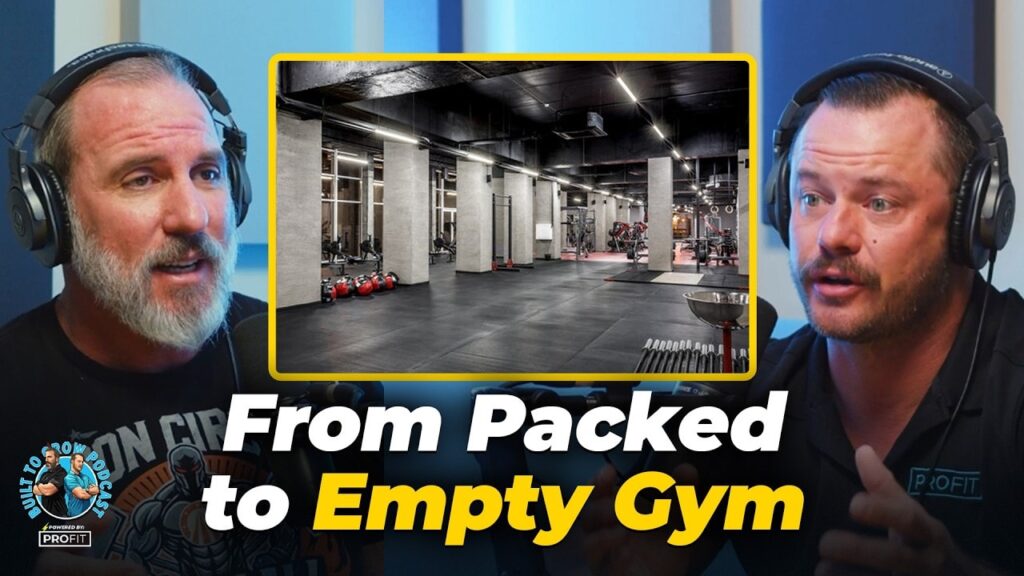
Gym business owners: a packed room does not equal a profitable gym business. You can fill classes, crank the music, and still be bleeding cash because clients churn faster than you can acquire them. This piece lays out why large group training went from the hottest way to scale a gym business to a m
Gym business owners: a packed room does not equal a profitable gym business. You can fill classes, crank the music, and still be bleeding cash because clients churn faster than you can acquire them. This piece lays out why large group training went from the hottest way to scale a gym business to a model that now struggles with retention, commoditization, and price wars. Then it shows a clear, actionable path to a better model: semi-private training that wins clients, keeps them longer, and grows revenue per client.
Where large group training started - and why gym business owners chased it
Back in the mid-2000s, the idea of scaling a gym business by moving beyond one-on-one coaching made perfect sense. If one coach can only serve one client, then adding group sessions with 15 to 25 people felt like a multiplication lever for revenue. Systems like Les Mills, early CrossFit boxes, boot camps, and later brands such as OrangeTheory offered a replicable format: a consistent class, loud music, high energy, and a feel-good community.
That replication was attractive for two reasons. First, the capital expense was low. Big open rooms, a few barbells or rigs, and a sound system were enough to get started. Second, it created a simple sales pitch for a gym business: deliver consistent workouts at a lower price than one-on-one training and scale attendance. For a while it worked - gyms grew quickly and group sessions filled up.
Why that success didn't last in many gym businesses
The first cracks appeared when the market reached saturation. Because the offering was largely identical from one business to another, competition concentrated on price and convenience. Clients could belong to multiple class-based gyms, bounce between studios, or just train outdoors - all for similar results. That turned many large group training offerings into commodities.
The second, deeper issue is that customers want more than heat and a great playlist. After years of the same metabolic sequences, they started asking logical questions: am I getting results? Is this worth the money? Can I do this on my own? If the answer doesn't clearly demonstrate a path to better strength, mobility, or measurable progress, they cancel.
Those cancellations add up. Across the industry the average attendance for a class-style session has dropped to roughly six people. Some franchise models reported average retention as low as three months. When your customer lifecycles shorten that dramatically, client acquisition cost eats margins. A gym business that depends on high turnover to keep numbers up eventually finds itself in a revolving door scenario.
The commoditization problem explained
When customers see "hot sweaty bodies with loud music" everywhere, brand differentiation disappears. That means:
- Competition becomes a race to the bottom on price.
- Clients shop for convenience rather than loyalty.
- Marketing has to work harder, not smarter - spend more for the same results.
From a gym business perspective, if your product is undifferentiated and acquisition costs continue to climb, profit margins shrink or disappear entirely.
Two choices for a gym business owner
When a product category becomes crowded and margins compress, a smart gym business leader has two basic options:
- Make the existing product meaningfully better and proprietary so it stops being a commodity.
- Change your model entirely to something the market values more and that is harder to copy.
Both are valid, but the first is difficult at scale unless you create a unique mechanism people cannot get elsewhere. Zumba is an example of a class that remained differentiated because of its unique format and cultural appeal. Most HIIT class formats pale by comparison because they're easily replicated.
Why simply shrinking the class size is not the answer
Many gym business owners assume that limiting class size - turning a 15-person WOD into a capped six-person session - is a premium upgrade. They charge more and expect members to pay simply because the room is smaller. That assumption fails because it confuses scarcity with value.
What members actually pay for is customization and attention, not just an empty chair in the circle. If those capped classes still give everyone the same workout, with identical sets, reps, and a one-size-fits-all progression, then the smaller group is little more than a marketing trick. It won't sustain higher price points or improve retention in the long run.
What semi-private training really means for a gym business
Semi-private training is not "large group with fewer people." It is a distinct product class built on deliberate coaching, individualized programming, and a clear progression model. When implemented properly, semi-private training changes the economics of your gym business by increasing client lifetime value and raising revenue per client while reducing churn.
Key differences:
- Customization - Workouts are tailored to individual abilities, goals, and training frequency.
- Periodization - Training follows planned cycles (strength phases, hypertrophy, power, metabolic conditioning), not random WODs.
- Progress tracking - Each member has metrics, weight progression, or movement standards that demonstrate progress.
- Coach attention - Coaches guide load selection and technical fixes rather than cueing a generic sequence for everyone.
- Structured splits - Programs can be full body, upper/lower, push/pull or other splits depending on frequency.
How semi-private training works in practice
Imagine a six-person session. That same training block no longer means six people doing identical reps at the same load. Instead:
- Athlete A is on a strength block doing 3×5 at near-max loads.
- Athlete B is on a hypertrophy block doing 4×10 at a moderate load.
- Athlete C is on a recovery-focused plan with lower loads and mobility-based work.
- Athlete D has a modified version due to an old shoulder injury with alternative exercises and a different rep scheme.
Coaches manage those differences through precise programming and real-time adjustments. That kind of attention is what clients say they are willing to pay for.
Why software matters for delivering semi-private at scale
Delivering individualized programming inside a small group is hard on pen and paper. Coaches used to fall behind trying to remember each member's cycles, progressions, and modifications. The solution is a system that can manage programming, deliver workouts to coach tablets or member phones, and log progress.
Software such as tools built specifically for semi-private training makes individualized programming operationally feasible. For a gym business, that means you can deliver high-touch results without doubling or tripling coaching staff. Systems also create a better client experience because members can see their plan, understand the why, and track gains over time.
Pricing and the revenue mindset - stop counting heads
Too many gym business owners measure success by client count. That thinking came from the early days of the large group model where high attendance proved the concept. It's a trap in today's market. Instead focus on revenue per client and lifetime value.
Examples from practice:
- Some gyms charge under $400 per month for semi-private services and succeed because clients are getting measurable progress and attention.
- Others position a premium offering at $700 to $800 per month and need fewer clients to reach the same income goals.
When you can reliably deliver outcomes, the gym business becomes less about headcount and more about the value of each seat. That shift changes hiring, scheduling, and marketing because you target higher-value clients who are easier to retain and less likely to complain.
Who will you attract after switching models?
When a gym business moves to a true semi-private model, the client mix often shifts. You typically find:
- Clients who are more affluent and ready to invest in results.
- Fewer price shoppers and "squeaky wheels."
- Members who are easier to coach and more likely to refer friends.
That change alone improves club culture. Coaches get to work with clients who are excited about progress, which increases staff retention. A more consistent client experience also builds word-of-mouth marketing rather than relying solely on paid ads.
How to evaluate whether semi-private is the right move for your gym business
Deciding to switch models is one thing. Doing it well is another. Here are a few signals that your gym business should consider the shift now:
- Retention for group classes is under six months and trending down.
- Your average class attendance is below eight people most days.
- Advertising costs to maintain headcount are rising faster than revenue per client.
- Customer feedback frequently asks for "more personalized coaching" or "real strength progress."
If at least two of those apply, you're likely burning marketing dollars just to replace churn. That is not sustainable for a gym business long-term.
Transitioning your gym business - step-by-step playbook
Switching from large group to semi-private is not an overnight flip. It's a deliberate, staged process you can execute within quarters. Below is a practical playbook you can use.
1. Audit your current product and finances
- Identify revenue per client, acquisition cost, and churn rate.
- Map out your current class schedule and actual attendance numbers (not capacity).
- List the top complaints from members and the most common member goals.
This baseline tells you how much risk you can tolerate and how quickly you need to move.
2. Design a semi-private product that is truly different
- Create clear program cycles: 12-week strength phases, 6-week conditioning microcycles, deload weeks, etc.
- Define how programming will adapt to frequency: twice-weekly members get different blocks than four-day members.
- Set a maximum session size (6 is common) and outline coach-to-client responsibilities.
Remember, the goal is to sell attention and results, not scarcity.
3. Train coaches and document a language
- Teach coaches to prescribe loads, correct movement, and adjust progressions.
- Create consistent language across coaching staff so members get the same messaging.
- Build coaching rubrics for common injuries and regressions.
Coaches are the differentiator for a gym business. Invest here first.
4. Adopt the right technology
- Choose software that handles program delivery, progress tracking, and coach notes.
- Ensure members can view their plan and metrics on their phones.
- Use automation for scheduling and billing to reduce admin friction.
5. Set pricing tied to value
- Model revenue per seat not number of seats. Run scenarios: 60 seats at $399 vs 40 seats at $599.
- Create clear packaging: number of sessions per week, access to additional resources, drop-in policies.
- Position the price around outcomes: "12-week strength cycle with weekly load progression."
6. Communicate the change to existing members
- Segment your list: current group-class members, sporadic attendees, and prospective leads.
- Announce the change with a value-focused message: highlight outcomes, coach attention, and progression.
- Offer a pilot or trial for interested members to experience the difference risk-free.
Expect some existing members to leave. That is normal. Your job is to replace them with higher-value members who appreciate the new product.
7. Market to the right audience
- Target people who are outcome-driven: those interested in strength gains, fat loss with accountability, or corrective training.
- Use case studies and progress metrics in ads, not just sweaty, high-energy imagery.
- Leverage email and referral campaigns that reward members for bringing in similarly minded clients.
Revenue modeling example for your gym business
Here's a simplified model to illustrate how fewer clients paying more can out-earn a high-volume class-based model.
- Large group model: 200 clients paying $120/month = $24,000/month. Average retention 4 months, high acquisition spend to maintain headcount.
- Semi-private model: 100 clients paying $399/month = $39,900/month. Higher retention 9-12+ months, lower acquisition per net retained customer.
Even with fewer heads, the revenue and lifetime value can be dramatically higher. That changes your hiring needs, reduces the pressure to constantly spend on ads, and creates more predictable cash flow for the gym business.
Common objections and how to answer them
Objection: "My town already has semi-private options."
Answer: That is fine. Differentiation is about how you deliver the service - programming, coaching quality, culture - not just the label. The earlier you build a reputation for better outcomes, the more defensible your position becomes.
Objection: "We can convert our current large group members."
Answer: You will convert some, but not all. Focus outreach on members who have been inconsistently engaged or have asked for more attention. Use local marketing to attract people who have never tried your gym but will value the upgrade.
Objection: "We don't have software or coaches trained for this."
Answer: Start small with pilot sessions. Invest in one coach getting the training and a simple software tool. Show measurable client results and scale the model. This phased approach reduces risk for the gym business.
Measurement and key performance indicators for the gym business post-transition
Track these KPIs monthly to know if the transition is working:
- Revenue per active client
- Average client retention months
- Client acquisition cost (CAC) per net new retained member
- Coach utilization and client-to-coach ratio
- Net promoter score or referral rate
A successful semi-private model should show rising revenue per client, increasing retention, and lower CAC over time when compared to the group-based baseline.
Culture and coach hiring in the new gym business model
Moving to semi-private flips the role of coaches from "class conductor" to "progression manager." That requires different hiring criteria:
- Look for coaches with programming knowledge, not just charisma.
- Value communication skills: the ability to explain progressions and scale work intelligently.
- Prefer coaches who keep notes and deliver consistent cues across members.
Culture shifts naturally when members see measurable gains. Coaches enjoy working with clients who show up for the long term, and the gym business benefits from lower turnover on both sides.
Timing matters - why now is the advantage window for gym business owners
Models in consumer services almost always follow a lifecycle: novelty, rapid growth, saturation, price competition, and consolidation. The large group training market has moved into the latter stages. For gym business owners who act now, there's an advantage in being an early adopter of the next wave.
If you wait, competitors will copy semi-private, and differentiation will once again compress. Acting now gives you the opportunity to claim a new category in your market and establish a reputation for outcomes before the herd follows.
Final checklist for gym business owners ready to change
- Run a financial audit and model revenue per client scenarios.
- Design a distinct semi-private program with periodization and individualized progression.
- Train one or two coaches and pilot the model with a small cohort.
- Implement simple software to track programming and results.
- Adjust pricing to reflect value and target higher-lifetime-value clients.
- Communicate clearly with current members and market to a new audience.
- Measure KPIs and iterate month to month.
Closing thought
Large group training had its moment. For many gym business owners, that moment has passed. The market now rewards models that deliver measurable results, individualized attention, and a predictable path to progress. Semi-private training is not a tweak - it is a redesign of the product you sell and how your gym business captures value in a competitive market.
If you want a gym business that outperforms on retention, increases revenue per client, and improves culture for staff and members alike, stop measuring success by headcount alone. Build a product people can only get from you: a structured, measurable, coach-driven path to results.
"Packed rooms are great for Instagram. Predictable revenue and long-term clients are better for business."
"Packed rooms are great for Instagram. Predictable revenue and long-term clients are better for business."
Your next move matters. Design for outcomes, price for value, and run your gym business like a performance company rather than a crowd manager.
Ready to scale your gym alongside a community of 7-figure owners? Learn more about the Iron Circle . Related Posts Why Most Gyms Are Stuck at $20k a Month and How to Break Free - A gym business playbook Semi-Private Training: The Shift Every gym owner, gym business, fitness businss Needs in 2026 Can Your Gym Business Survive Without You? A Practical 3-Level Framework for Growth Further Reading: The Ultimate Guide to Scaling a Gym Business About the Author Tim Lyons Tim Lyons is a 17-year gym owner, CEO of Gym Business Coach, and founder of Iron Circle - the private mastermind for serious gym owners. He is the author of the Built series and has helped thousands of gym owners across North America build profitable, scalable fitness businesses. Springboard Program Iron Circle Mastermind
Ready to scale your gym alongside a community of 7-figure owners? Learn more about the Iron Circle .
Related Posts
- Why Most Gyms Are Stuck at $20k a Month and How to Break Free - A gym business playbook
- Semi-Private Training: The Shift Every gym owner, gym business, fitness businss Needs in 2026
- Can Your Gym Business Survive Without You? A Practical 3-Level Framework for Growth
Further Reading: The Ultimate Guide to Scaling a Gym Business
About the Author
Tim Lyons
Tim Lyons is a 17-year gym owner, CEO of Gym Business Coach, and founder of Iron Circle - the private mastermind for serious gym owners. He is the author of the Built series and has helped thousands of gym owners across North America build profitable, scalable fitness businesses.
Springboard Program Iron Circle Mastermind
Continue learning
The Semi-Private Model
Explore more Gym Business Coach strategies on this operating topic.
Explore this topic →
GYM BUSINESS COACH TEAM
The Gym Business Coach Team helps gym owners build more profitable, scalable businesses through coaching, masterminds, and live events. 2,500+ gym owners coached across North America. Learn more at ironcircle.net.