Many gyms confuse community with belonging, creating cliques that drive churn. Learn coach-led systems to onboard new members and boost retention.
Why Your Gym Business, Fitness Business, Gym Owner Community Isn’t Working
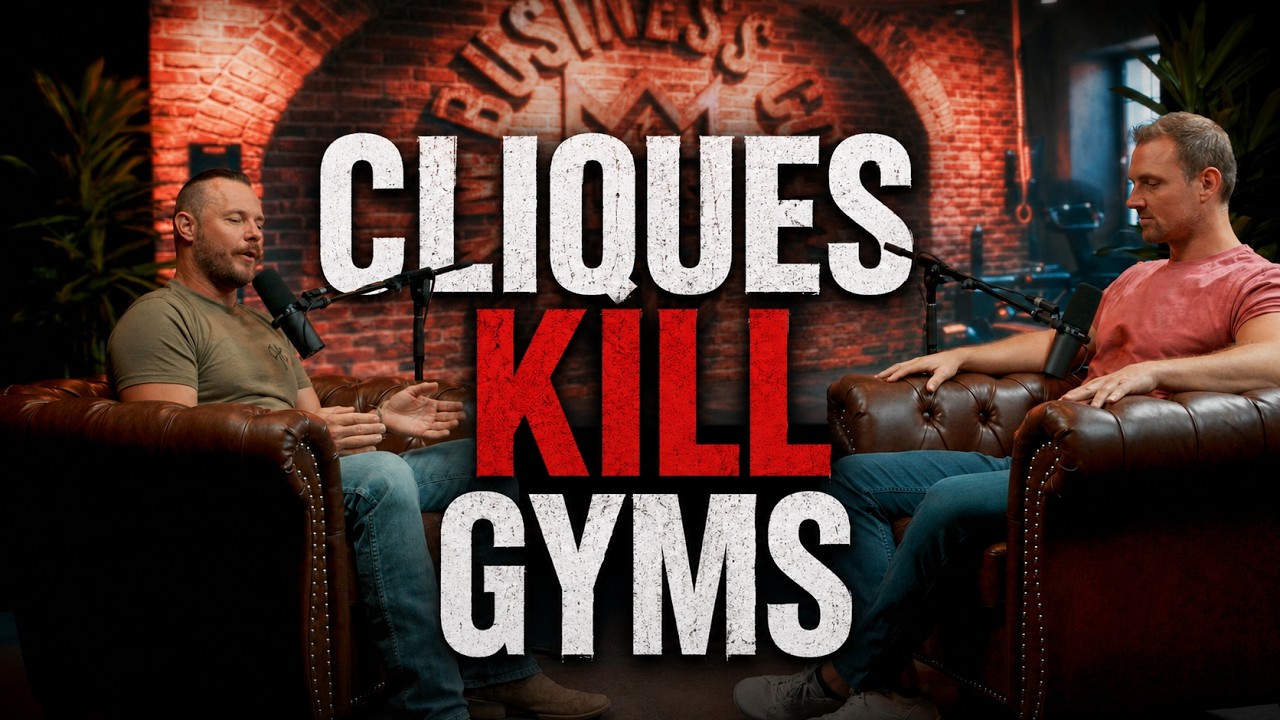
Community gets talked about like it is the secret weapon in every gym business, fitness business, gym owner conversation. “We have an amazing community.” “People stay because of the community.” “Our community is what makes us different.”
And sure, a great community matters. A lot.
But community by itself does not automatically create retention. It does not automatically make a new person feel comfortable. It does not guarantee that someone who joined last week will still be there six months from now.
In some cases, the community you are so proud of may actually be one of the reasons people leave.
That sounds harsh, but it is worth looking at honestly. If your gym has a small group of loyal longtime members who love each other, train together, joke around, and seem inseparable, that is great for them. The question is whether a brand-new person can actually become part of that group.
If they cannot, you do not have a healthy community. You have a clique with gym equipment.
The goal for a gym business, fitness business, gym owner is not simply to build a room full of familiar faces. The goal is to create a place where every person can walk in and feel, “These are my people. This is where I belong.”
Table of Contents
- Podcast Intro
- Why Gym Community Is Misunderstood
- Community vs Belonging Explained
- Coaching Standards That Improve Retention
- Helping New Members Feel Included
- When Gym Community Backfires
- Becoming Your Members' Third Place
- Systems That Build Belonging
- Defining Your Gym Identity
- How Cliques Hu
Podcast Intro
Every gym owner wants the kind of place members talk about outside the gym. The kind of place where people know each other’s names, encourage each other through hard workouts, and miss each other when somebody does not show up.
That kind of environment is powerful. It gives people another reason to come in when motivation is low, work is busy, or life gets messy. Nobody wants to bail on their health goals, but it happens all the time. Having people who notice your absence can make a real difference.
Still, a gym community is not something that appears because you put the word “community” on your website, host an occasional social event, or have a few members who have been around forever.
It takes intentionality.
For a gym business, this is one of those areas that can feel a little fuzzy because it is human. You cannot script friendships. You cannot force people to become best friends. And you definitely cannot manufacture good culture by putting a neon sign on the wall that says “family.”
What you can do is build the conditions that make belonging easier.
That starts with understanding the difference between community and belonging.
Why Gym Community Is Misunderstood
A lot of gyms think community is their main differentiator. They say it proudly, and to be fair, most gym owners genuinely want that to be true.
But the word gets used so loosely that it stops meaning much.
When somebody says, “We have great community,” what do they actually mean? Do they mean members know each other? Do they mean a handful of long-term clients are loyal? Do they mean people attend the same class times and laugh together before training?
All of that can be part of a community. None of it guarantees that new members feel included.
This is where many group training gyms, especially gyms with a strong tribe mentality, get stuck. They have their OG members. These are the people who have been there for years. They know the coaches. They know the inside jokes. They know where everybody parks, who is dating who, whose shoulder hurts, and exactly where the good coffee is after Saturday training.
Those people are loyal. They may follow the gym anywhere. They are the core tribe.
The problem is that a small, tight tribe can become an inner circle. Around that inner circle is an outer ring of people who join, participate for a while, and eventually leave. They orbit the group, but never really get into it.
A gym owner may look at the loyal members and think retention is strong because a few people have stayed for ten years. But the more useful question is this:
- How many members have actually been there for ten years?
- How many people join and quietly disappear within a few months?
- How many new members seem friendly enough but never become connected?
- How many people feel like guests in someone else’s gym?
A few long-term members do not automatically prove a gym has a strong culture. They may simply prove that one small group has found its place.
For a fitness business, that distinction matters because the people on the outside are often the people most likely to churn.
Community vs Belonging Explained
Community is the group. Belonging is the individual’s experience inside that group.
That is the difference.
A person can walk into a gym and clearly see that a community exists. People are talking. People are laughing. People know each other. There is energy in the room.
But that same person can still feel completely alone.
They may be thinking:
- Where do I fit here?
- Do these people actually want me around?
- Am I supposed to introduce myself?
- Will anyone talk to me besides the coach?
- Am I the awkward new person who does not know what is going on?
That is why “sense of belonging” is a better standard for a gym business, fitness business, gym owner than community alone.
Belonging means a new member understands that there is a place for them. They are not merely allowed to be there. They are wanted there.
It means they can begin to see themselves as part of the gym’s identity. They know who the place is for, why people train there, and how they fit into that picture.
Community might be the room. Belonging is the feeling that there is a seat for you in it.
That is what turns a decent workout experience into “I think I found my new home.”
Coaching Standards That Improve Retention
If belonging matters, it cannot be left to chance.
One of the biggest mistakes a gym owner can make is assuming coaches naturally know how to create an inclusive environment. Some coaches are excellent at it. Some are not. Some are warm and welcoming but inconsistent. Some are so locked in on the workout that they forget the emotional experience happening around them.
That is why coaching standards matter.
A gym can create a clear standard experience, meaning a defined list of things every client should experience while doing business with the gym. A sense of community and belonging should be part of that standard, not an accidental bonus if the right coach happens to be working that day.
For a fitness business, this also gives you something tangible to coach, review, and improve. Instead of saying, “Be better with people,” you can ask specific questions:
- How did you introduce the new member?
- Did you help them connect with the people training at that time?
- Did you explain what was happening so they did not feel confused?
- Did you make it clear that their program was personalized while still making them part of the group?
- Did you create an environment where other members were likely to engage with them?
These are not small details. They are retention details.
When coaches understand that part of their job is helping new people find their place, the whole experience changes. The coach becomes the catalyst. They open the door into the group instead of leaving the new member to stand outside it and hope somebody notices.
That does not mean coaches need to force fake friendships. Nobody wants a weird, over-the-top introduction that feels like they just walked into a surprise birthday party for someone else.
It means the coach takes responsibility for making the first connection easy.
Helping New Members Feel Included
Picture two versions of a first training session.
In the first version, a new member walks in. The coach says hello, takes them to the training floor, points them toward a warm-up, and starts explaining the workout. Across the room, the regulars are talking, laughing, and moving through their usual routine.
The new person has a coach, which is helpful. But they have no connection to anyone else. They are there for an hour, surrounded by people, yet still on their own.
They might leave thinking, “That was a good workout.”
But a good workout is not always enough to make somebody come back.
Now picture the second version.
The coach brings the new member into the space and introduces them to the group. It does not have to be a huge production. It can be quick, relaxed, and human.
The coach might say that there is somebody new training that hour, introduce them by name, and give the group a moment to say hello. The coach can even acknowledge the obvious truth: the new member may not remember every name right away, but the regulars will remember theirs.
That simple moment changes the energy.
Now the regulars know there is someone new. They have permission to engage. They are more likely to ask where the person lives, how they heard about the gym, or how their first session is going. The new member is no longer invisible.
Then the coach can explain that the new member’s workout may look different because they are being onboarded and their program is individualized. That matters in a semi-private setting. The person can understand that their plan is customized to them, while still knowing they are part of the same training environment.
A gym business does not need to choose between personalization and connection. You can give someone an individualized workout and help them become part of the room at the same time.
The point is not to make a new member endure 55 uncomfortable minutes while everyone else acts like they are not there. It is better to let them have 10 slightly awkward seconds during a warm introduction, then give them a much more comfortable hour....[truncated]
Continue learning
Retention and Operations
Explore more Gym Business Coach strategies on this operating topic.
Explore this topic →
GYM BUSINESS COACH TEAM
The Gym Business Coach Team helps gym owners build more profitable, scalable businesses through coaching, masterminds, and live events. 2,500+ gym owners coached across North America. Learn more at ironcircle.net.