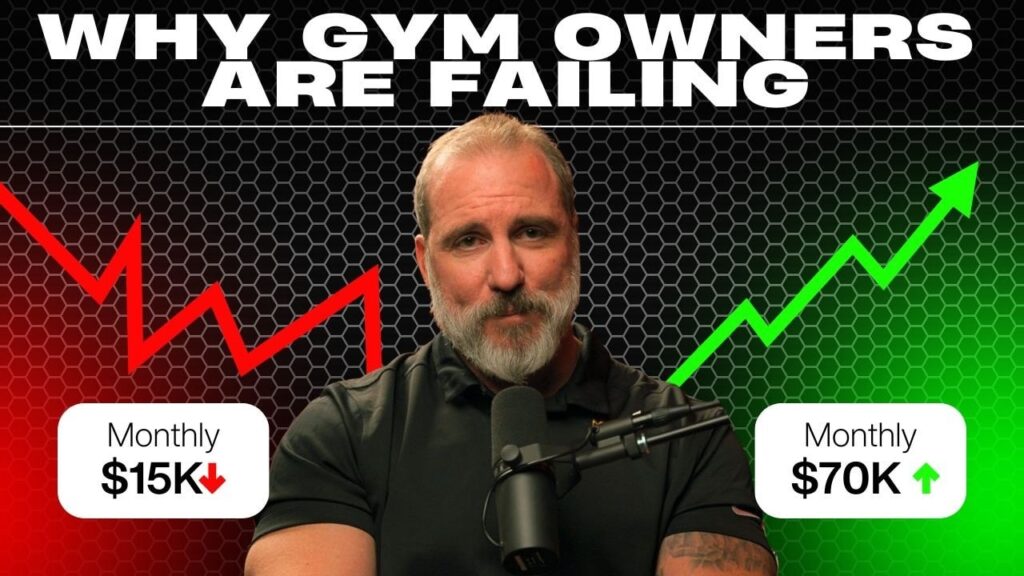
If you care about being a gym business coach, fitness business owner, or someone who wants a real, sellable gym rather than a glorified job, there are a few ugly truths you need to hear. After working with over a thousand gyms and adding more than $82 million in results, the patterns are no longer [
If you care about being a gym business coach , fitness business owner , or someone who wants a real, sellable gym rather than a glorified job, there are a few ugly truths you need to hear. After working with over a thousand gyms and adding more than $82 million in results, the patterns are no longer mysterious. They are repeatable. They are measurable. And they are fixable.
This article lays out the practical, uncomfortable lessons that separate gym owners who stay stuck from those who scale. You will get real examples, the raw numbers that matter, and a playbook you can start using today. Think of this as a field guide from a gym business coach, fitness business insider who's seen both sides of the coin enough to call out what actually works.
Table of Contents
- The single idea that changes everything
- Two stories that show the forks in the road
- The biggest lie in the fitness industry
- Lead quality is not the point. Delivery is.
- How to fix delivery, practically
- Why the gym needs to own the programming
- What the data from 1,000 gyms actually shows
- How to move from owner-as-hero to owner-as-CEO
- Common mistakes that kill momentum
- Practical 90-day sprint you can run this month
- What to do tomorrow
- Final note - the choice is yours
The single idea that changes everything
Most gym owners believe the answer is harder work. They wake up earlier, coach more sessions, fix things themselves, and respond to every message. The truth I've seen as a gym business coach, fitness business consultant is the opposite. Hard work gets you traction early. It does not scale.
The owners who win learn to think like investors, not like overworked coaches. That mental shift - from "how can I work harder" to "what is my return on this hour or dollar" - is what lets someone stop cleaning equipment at midnight and start scaling their revenue without burning out.
Two stories that show the forks in the road
Sarah: The coach who became an investor
Sarah ran a gym in Ohio. She coached 35 sessions a week, had cracked hands from cleaning equipment, and hadn't taken a single weekend off in two years. Her life was collapsing under the weight of doing everything right for the wrong reason.
Eighteen months later she was doing $67,000 a month. She coached maybe four sessions a week and took a three week family trip to Europe without checking her phone. Her highest revenue month ever happened while she was gone.
What changed? Not a flashy marketing trick. She stopped tying her identity to the floor. She started thinking like an investor. Every decision became about return. She stopped doing $15 an hour tasks, raised prices , and built systems that turned the gym into an asset.
Marcus: The good guy with the wrong priorities
Marcus ran a solid gym. He was the classic passionate owner who did sales, coached most sessions, and managed the day to day. We built a simple plan to double his revenue to $40,000 in six months. He had a clear path and the energy to make it happen.
He implemented nothing. Every conversation turned into a reason why not: AC broke, a client emergency, not the right time to raise rates. The work that mattered was repeatedly put off for things that felt urgent. Eight months after we started working together he closed the gym.
Marcus's mistake is common. He mistook activity for progress. He confused busyness with leverage. The work that builds a scalable business is the unpopular stuff: designing onboarding , creating repeatable consultations , hiring for fit instead of filling shifts, and saying no to clients or actions that sabotage long term value.
The biggest lie in the fitness industry
If you have heard an owner say, "I just need more le ads ," that phrase is almost always wrong. More leads rarely fix the real problems. I say this as a gym business coach, fitness business partner who has repeatedly seen gyms pour money into ads while fundamentals leak revenue and retention .
Here's the math most owners ignore. If you get 100 leads a month:
- 30 book an appointment
- 10 show up
- 3 become paying clients
That is a 3 percent conversion from lead to client. So what do most people do? They throw more ad dollars at the funnel. It feels like progress. It looks like motion. But you are filling a bathtub with the drain open if your follow up, sales process, and onboarding are leaking.
Lead quality is not the point. Delivery is.
I worked with a gym owner in Texas who was spending $3,000 a month on ads and stuck at $18,000 in revenue. His agency convinced him to double down and spend $5,000 a month. Instead, we did nothing to the ads.
We rebuilt what happened after the lead came in. Speed to contact went from hours to five minutes. Consultations became an objection-anticipating conversation instead of a loose chat. Onboarding sequences delivered immediate value so the client stopped wondering if they made the right choice.
Six months later without increasing ad spend he was at $41,000 a month. The lesson: fix the experience first. If your dream client walks in motivated and ready to invest, would your gym make the sale feel obvious? If the answer is no, you do not have a lead problem. You have a delivery problem.
How to fix delivery, practically
Delivery is the set of systems that move a person from curious lead to long-term client who stays for years. Fixing delivery means systematizing the client journey from first contact through month 12 and beyond. Here's what works.
- Speed to contact - Call or message leads within five minutes. Fast contact increases show rates and signals professionalism.
- Consultation framework - Use a repeatable script that uncovers needs, sets expectations, and addresses objections before they become reasons to say no.
- Onboarding that proves value - Day one should feel like a win. Automate welcome sequences, track first-week check-ins, and give measurable short-term wins.
- Standardized check-ins - Schedule day 7, day 30, day 60, day 90 touchpoints. Document conversation notes and next steps so follow up is consistent even if staff changes.
- Owner-focused systems - The owner's job becomes building and refining these systems rather than solving daily problems.
If any of these items are missing or inconsistent, every lead you buy is a wasted opportunity. The easy fix is often less ad spend and more structure.
Why the gym needs to own the programming
Early on I made a common mistake. I hired independent coaches, let them run their own programs, and collected rent. It seemed smart - hire experts and let them bring clients. What happened felt like chaos.
At the same time there were CrossFit style workouts in one corner, bikini competitor programming by the mirrors, and a mobility class for 70-year-old clients on the floor. There was no brand. Clients were loyal to the individual coach, not the gym. When a coach left, clients left with them.
The solution was brutal but necessary: centralize programming and make the gym the owner of the client relationship. That means:
- One programming system delivered consistently by all coaches
- Coaches trained to execute that program, not design it on the fly
- Software and systems that surface individualized plans and progress tracking to the client the moment they walk in
- Onboarding and sales owned by the gym so client relationships stick to the brand
When programming belongs to the gym, coach turnover matters less and client retention becomes a product of the system rather than the person at the front of the room.
What the data from 1,000 gyms actually shows
We collected P&Ls, retention data, operational metrics, and more from over a thousand gyms. Patterns emerged that blew apart common myths. Here are the headline findings.
1. Retention is the single biggest driver of revenue
High revenue gyms average over 24 months of client retention. Struggling gyms average under 7 months . To illustrate: at $200 a month a seven month client has a lifetime value of $1,400. A 24 month client is worth $4,800. That is not a small difference. It is the difference between scraping by and building a valuable, sellable asset.
Improving retention is effectively the same as increasing your marketing ROI by 2x or 3x without spending another dollar on ads.
2. Most owners are undercharging themselves
Pricing audits across hundreds of gyms showed that fear of raising rates is usually irrational. When gyms raised prices, cancellations barely budged. In many cases they fell because higher prices filtered out noncommitted clients and attracted more serious ones.
Many owners are leaving 25 to 35 percent on the table because they are afraid to charge what they are worth. Raising prices, when supported by a better delivery experience, compounds into higher lifetime value and better teams.
3. Semi-private training wins on revenue per hour and retention
We tracked revenue per session hour across three models: large group, private training, and semi-private training . The numbers are clear:
- Large group average: about $89 per session hour
- Private training average: about $100 per hour
- Semi-private training (one coach, four to six clients): up to $240 per hour
Same time investment. Almost three times the revenue when done right. But there's more. Retention for semi-private clients averaged 36.2 months while large group models averaged 9.8 months . In many big-box large group franchises it can be under three months.
The math here is unambiguous. Semi-private scales better, makes more per hour, and keeps clients longer. If you want to maximize revenue without inventing a new marketing tactic, design your business around semi-private delivery.
4. Owner involvement becomes a ceiling at about $30,000 a month
We tracked how much owners are on the floor versus revenue. Up to about $30,000 a month, owner involvement is positively correlated to performance. The owner selling, coaching, and managing drives growth early on.
After $30,000 a month something flips. The more the owner does, the worse the gym performs. Owners become bottlenecks. The gyms that breach $50,000, $75,000, and $100,000 months systematically remove the owner from daily ops and focus on systems, hiring, and leadership.
The thing that got you to $30,000 will keep you at $30,000 if you do not change roles.
How to move from owner-as-hero to owner-as-CEO
Changing roles is hard. It also happens in predictable steps. Think of this as building traction and then swapping tasks for systems.
- Document everything - If you cannot hand someone a checklist and get the same result, you do not have a system.
- Hire for execution - Look for people who follow the program, hit the checklists, and care about client outcomes more than ego-driven programming.
- Build a sales machine - Create a repeatable consultation, write down the script, role-play it until it becomes normal, then train your team to do it.
- Automate onboarding and check-ins - Use sequences to send content and prompts so clients feel supported without the owner doing all the chasing.
- Measure retention and LTV every month - Know your churn numbers, average client length, and revenue per session. Metrics tell the truth.
- Price with confidence - Test small increases, track cancellations, and watch the composition of your client base improve.
- Shift your focus to leading - Spend time on strategy, hiring, and product instead of filling daily gaps.
As you do these things you'll notice two shifts. First, your stress will drop because the system catches many of the things you used to fix manually. Second, your revenue will climb because retention improves and you get paid more per client hour.
Common mistakes that kill momentum
- Confusing busyness with progress and consistently choosing the urgent over the important.
- Spending on ads without fixing the post-lead experience.
- Letting coaches own programming and client relationships.
- Being terrified to charge more and therefore leaving revenue on the table.
- Not tracking retention and lifetime value as primary metrics.
- Refusing to change roles when growth demands it.
Practical 90-day sprint you can run this month
If you want a short, intense agenda with measurable outcomes, try this 90-day sprint that a gym business coach, fitness business owner can execute without fancy tools.
- Week 1 to 2: Document your intake and consultation process. Time every step. Script the top 10 objections and your responses.
- Week 3 to 4: Implement speed to contact. Measure response times and show rate changes.
- Month 2: Build a day-one onboarding sequence that guarantees a small win. Automate it.
- Month 2 to 3: Train two coaches on a standardized semi-private program. Run at least 60 sessions on it and measure revenue per coach hour.
- Month 3: Run a controlled price increase on new clients and a staggered increase for existing ones. Track cancellations and LTV.
- End of 90 days: Measure retention at 30 and 60 days. Compare revenue per session hour and coach utilization.
If you implement these steps, most gym owners in our programs average a $14,000 monthly revenue increase within the first 90 days. That is not a guarantee, but it is a predictable outcome when the work is done right.
What to do tomorrow
Pick one leak. Not five. One. Maybe it is speed to contact. Maybe it is day-one onboarding. Maybe it is standardizing programming so coach turnover stops stealing clients.
Fix that leak in a measurable way. Track the numbers for 60 days. If it moves the metrics, double down. If it doesn't, try a different leak. This is how a gym becomes an asset and not just a collection of appointments.
FAQ
How do I know if my problem is leads or delivery?
If you get steady leads and the people who show up do not convert at a high rate, you have a delivery problem. Run a simple test: stop all new ad spend for 30 days and improve speed to contact, consultation scripts, and onboarding. If conversions rise without more leads, you found the issue.
Should I move to semi-private training?
Semi-private training usually gives better revenue per coach hour and dramatically higher retention. If your model relies on high-volume large group classes with low retention, consider piloting semi-private for a few coaches and tracking revenue and churn.
Will raising prices make clients leave?
Most data shows cancellations barely change and sometimes decline after a price increase. Pricing filters for seriousness. Raise prices with better delivery and you will typically attract clients who stay longer and invest more.
How do I stop being the bottleneck?
Document processes, hire for execution, and delegate measured outcomes. Replace tasks with systems and spend your time on hiring, product, and leadership.
What metrics should I track monthly?
Track retention months, revenue per session hour, lead to client conversion rate, average client lifetime value, and coach utilization . These numbers tell you where to focus.
Is it worth building my own software?
Not always. The decision depends on scale and specific needs. Many gyms start with off-the-shelf tools and templates and move to custom solutions when the systems are proven and the ROI is clear.
How fast can I expect results?
Quick wins are possible within 30 to 90 days for conversion and onboarding fixes. Retention improvements show over longer windows, often 6 to 12 months as systems compound.
Do these strategies work for every market?
The principles are universal: retention, pricing, delivery, programming, and owner role. Execution must be tailored to your market and client demographic, but the operating system is repeatable.
Build the Business, Not Just the Gym
Springboard is Tim Lyons' coaching program for gym owners doing $10k-$50k/month who are ready to install proven systems, simplify their model, and build a business that doesn't depend on them being there every day.
Learn About SpringboardFinal note - the choice is yours
Same industry. Same markets. Different outcomes because of different operating systems. Winners think like investors, build systems before they scale, own the programming and client relationship, obsess over retention, charge what they are worth, and remove themselves from operations before they become the ceiling.
If you are serious about turning your gym into an asset that pays you and can be sold one day, start by fixing delivery and obsessing over retention. Then price confidently and reconfigure your role from hero to CEO.
If you want a room with other owners doing this work, there are live summits and workshops that teach these exact systems with real case studies and operational playbooks. But the work begins with one small, measurable change you can make tomorrow.
For owners who want help, partnering with a gym business coach, fitness business expert who has run the numbers on thousands of gyms can accelerate the learning curve. But the single most important action is yours: stop mistaking motion for progress and fix the parts of your gym that create long term value.
Go make the gym worth owning.
FitPro Growth Summit
The #1 Gym Business Summit | Scottsdale June 25-27, 2026
Related Posts
- How to Turn the Holiday Slowdown into a Profit Engine for Your Gym Business
- Gym-Business, Fitness-Business, Gym-Owner Strategy: Why Your Model Is Already Behind (and What Wins Next)
- Best Mastermind Ever? Iron Circle Orlando Experience Breakdown - gym business, fitness business, gym owner
Further Reading: The Ultimate Guide to Scaling a Gym Business
About the Author
Tim Lyons
Tim Lyons is a 17-year gym owner, CEO of Gym Business Coach, and founder of Iron Circle - the private mastermind for serious gym owners. He is the author of the Built series and has helped thousands of gym owners across North America build profitable, scalable fitness businesses.
Springboard Program Iron Circle Mastermind
Continue learning
Freedom and Exit
Explore more Gym Business Coach strategies on this operating topic.
Explore this topic →
GYM BUSINESS COACH TEAM
The Gym Business Coach Team helps gym owners build more profitable, scalable businesses through coaching, masterminds, and live events. 2,500+ gym owners coached across North America. Learn more at ironcircle.net.