Introduction: The Growth Ceiling Every Gym Owner Hits Scaling a gym business is one of the most rewarding yet challenging endeavors an entrepreneur can undertake. Most gym owners start with a passion for fitness and a desire to help their community. However, passion alone does not build a sustainabl
Introduction: The Growth Ceiling Every Gym Owner Hits
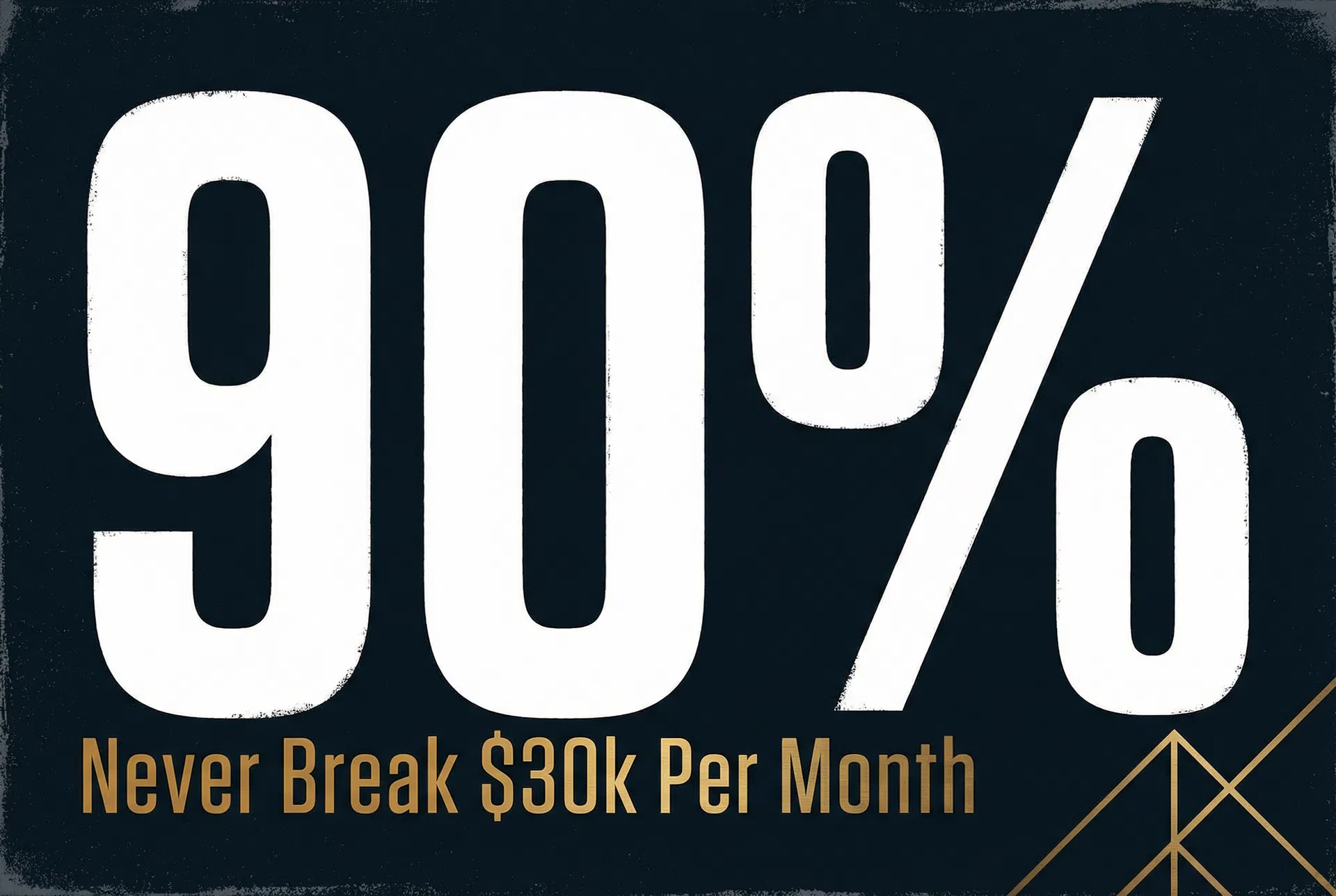
Scaling a gym business is one of the most rewarding yet challenging endeavors an entrepreneur can undertake. Most gym owners start with a passion for fitness and a desire to help their community. However, passion alone does not build a sustainable, scalable business. Eventually, every gym owner hits a growth ceiling, typically around the $20K to $30K per month mark.
At this stage, you are likely working 70 or more hours a week, coaching sessions, handling sales, and managing operations. You have built a high paying job rather than a business that can run without you. Breaking through this ceiling requires a fundamental shift in strategy, operations, and mindset.
Pillar 1: Transitioning to a Premium Value Architecture
The traditional gym model relies on high volume and low margins. Selling $99 per month memberships means you need hundreds of members just to break even. This model is exhausting and highly susceptible to churn.
To scale effectively, you must transition to a premium value architecture. The most successful model we have seen is Semi-Private Training. In this model, one coach works with three to four clients simultaneously. The clients receive the individualized attention and customized programming of personal training, but at a slightly more accessible price point. For the gym owner, this triples or quadruples the hourly revenue generated by a single coach.
When you offer premium services, you compete on the value and results you deliver, not on price. This attracts a higher caliber of client who is committed to their fitness journey and more likely to stay long term.
Pillar 2: Building a Predictable Lead Generation Engine
Relying on word of mouth or sporadic social media posts is not a strategy for scaling. You need a predictable, repeatable system for generating qualified leads.
This starts with intent based marketing. Instead of posting generic workout videos, your marketing should speak directly to the specific pain points of your target audience. Whether it is busy professionals looking to lose weight or former athletes wanting to regain their strength, your messaging must resonate deeply with their needs.
Every piece of marketing must drive prospects into a structured funnel with a clear call to action. Once a lead is captured, automated nurture sequences via email and SMS should educate them, build trust, and guide them toward booking a consultation.
Pillar 3: Developing Scalable Operations and a High Performance Team
You cannot scale a gym if you are the bottleneck. If every decision, every sales call, and every coaching session requires your presence, your business cannot grow beyond your personal capacity.
The solution is to build scalable operations through Standard Operating Procedures (SOPs). Every recurring task in your gym must be documented. This ensures consistency and allows you to train new staff effectively.
Furthermore, you must hire for roles, not just tasks. You need leaders, such as a dedicated Fitness Director and a lead salesperson, who take ownership of their departments. This allows you to transition from working in the business to working on the business.
Conclusion: The Path to 7 Figures
Scaling your gym to 7 figures and beyond is entirely possible when you implement the right systems. It requires moving away from exhausting tactics and embracing comprehensive frameworks for value delivery, lead generation, and team development.
If you are ready to stop playing small and want to surround yourself with top gym owners who are scaling with precision and speed, we invite you to explore the Iron Circle . It is built for leaders who play to win and are ready to dominate their market.
Scale Capacity Before You Scale Demand
More leads are not automatically progress. If the schedule is full, coaching quality is inconsistent, or the owner has to make every decision, additional demand can make the business harder to run. Start with a capacity plan. Know how many clients each coach can serve at the required standard, which sessions are most valuable, and where new clients can enter the schedule without creating chaos.
Capacity planning also forces a clear decision about the offer. If the service requires the owner to deliver every hour, it may be profitable but it is not scalable. The model needs documented delivery standards, coach development, and a client journey that works when the owner is not in the room.
Create a Financial Operating Cadence
Scaling owners know the numbers early enough to act on them. Build a weekly cash and sales review, a monthly profit review, and a quarterly planning conversation. Look beyond total revenue. Revenue can rise while payroll, discounts, refunds, and owner workload rise with it. The question is whether the business is becoming stronger, more predictable, and less dependent on heroics.
- Review revenue and active clients by service line.
- Measure payroll against the delivery model, not just the previous month.
- Track retained revenue alongside new sales.
- Set one quarterly operating priority rather than starting several major projects at once.
Build Leaders Before You Need Them
A gym does not become scalable because the owner hires more people. It becomes scalable when a few people can own outcomes. Begin by giving capable team members a narrow area of responsibility and a scorecard. Train them to run the meeting, solve routine issues, and report on the result. Expand authority as their systems become dependable.
This is slower than simply doing the work yourself for another quarter. It is also how the owner eventually creates time for strategy, relationships, and the choices that actually move the company forward.
Use Sequencing to Avoid the Growth Trap
The growth trap is trying to solve every problem with a new initiative. A better sequence is to make the offer clear, improve the delivery system, create capacity, strengthen the sales process, document the operations, then add demand. Each step supports the next. Skipping the order tends to create revenue that feels fragile and a business that relies even more on the owner.
A Scale-Readiness Conversation
Ask whether the team could explain the offer without you, whether a prospect receives the same sales experience every time, whether the weekly numbers show the real constraint, and whether you can step away for a week without service quality dropping. The honest answers show what to build next. For the operating foundation, read the gym owner's guide to hiring and operations.
About the Author
Tim Lyons
Tim Lyons is a 17-year gym owner, CEO of Gym Business Coach, and founder of Iron Circle - the private mastermind for serious gym owners. He is the author of the Built series and has helped thousands of gym owners across North America build profitable, scalable fitness businesses.
Springboard Program Iron Circle Mastermind
Continue learning
Pricing and Profitability
Explore more Gym Business Coach strategies on this operating topic.
Explore this topic →
GYM BUSINESS COACH TEAM
The Gym Business Coach Team helps gym owners build more profitable, scalable businesses through coaching, masterminds, and live events. 2,500+ gym owners coached across North America. Learn more at ironcircle.net.